tt
tt
tt
tt
tt
tt
Technology科技
•
2026年9月15日
The Prince of Data数据王子
An interview with Databricks cofounder and Berkeley professor Ion Stoica专访 Databricks 联合创始人、伯克利教授 Ion Stoica
by
Carson BeckerCarson Becker
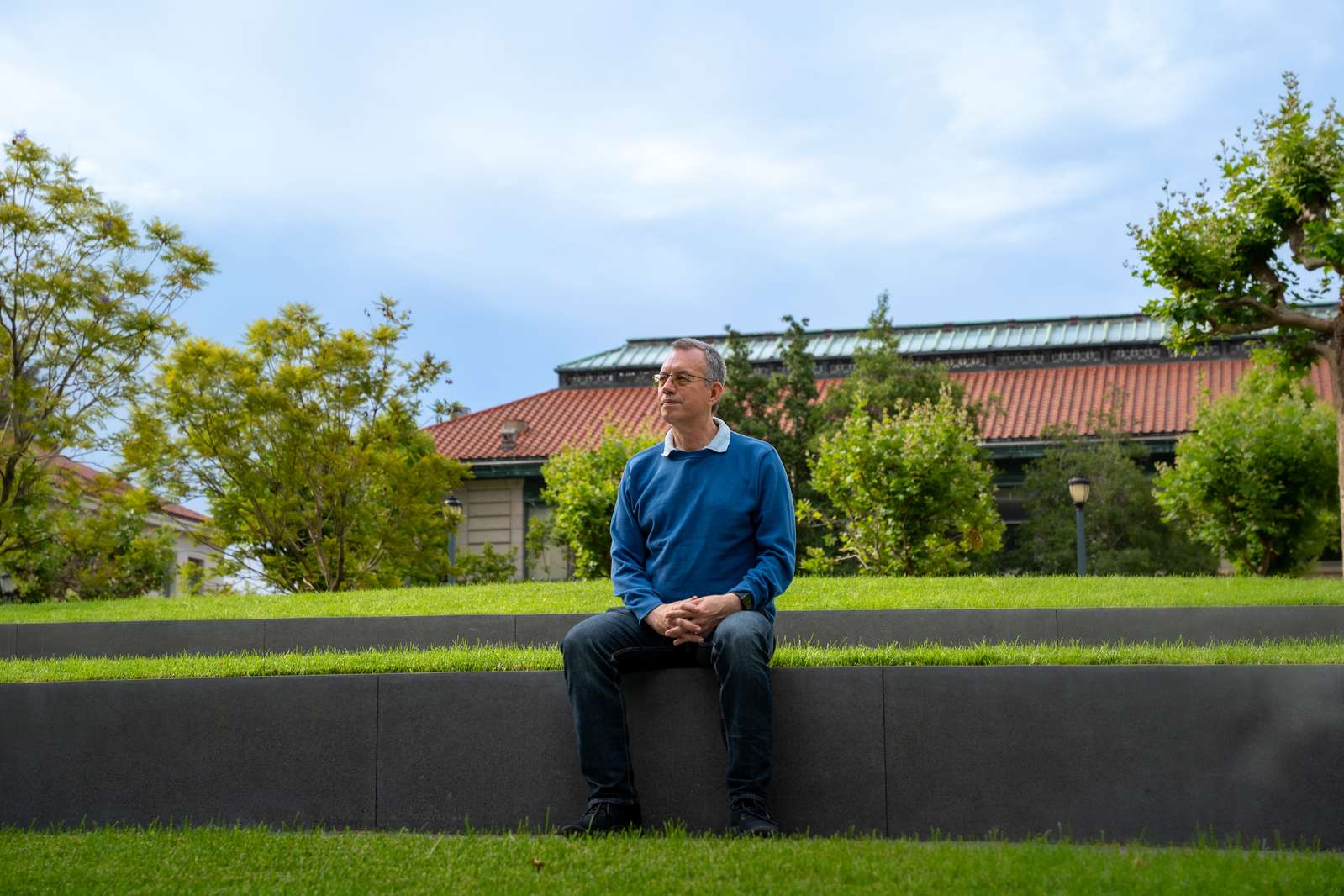

Ion Stoica is a Romanian-American computer scientist and Professor at the University of California, Berkeley. As cofounder of the unicorns Databricks and Anyscale, Stoica is among the most prolific academic-entrepreneurs of the 21st century.Ion Stoica 是一位罗马尼亚裔美国计算机科学家,也是加州大学伯克利分校的教授。作为独角兽企业 Databricks 和 Anyscale 的联合创始人,Stoica 是 21 世纪最多产的学术创业者之一。
Born in 1965, he was raised in Nicolae Ceaușescu’s Romania, where he served an obligatory nine months in the armed forces. He completed an MS in computer science at the Polytechnic University of Bucharest in 1989, a year of profound change across Europe. As the Warsaw Pact disintegrated, Romania’s particularly harsh totalitarian regime collapsed under the weight of its own contradictions. A combination of extreme austerity and social repression, combined with Ceaușescu’s distinctive policy of self-reliance, had eroded the regime’s reputation across all levels of society. In December, Ceaușescu was overthrown and executed, and Romania began its westward transition. Not long after the revolution, Stoica departed his homeland for the United States.他出生于 1965 年,在尼古拉·齐奥塞斯库统治下的罗马尼亚长大,并在那里服了九个月的强制兵役。1989 年,即欧洲发生深刻变革的一年,他在布加勒斯特理工大学获得了计算机科学硕士学位。随着华沙条约组织的解体,罗马尼亚极其严酷的极权政权在其自身矛盾的重压下崩溃。极端紧缩政策和社会压制,加上齐奥塞斯库独特的自力更生政策,使该政权在社会各阶层的声誉荡然无存。12 月,齐奥塞斯库被推翻并处决,罗马尼亚开始了向西方的转型。革命后不久,Stoica 便离开祖国前往美国。
Stoica has had an enormous impact on computer systems and networking beginning with his early work as a graduate student at Old Dominion University, a public university in Norfolk, Virginia. At ODU, he devised a process-scheduling algorithm that was later adopted as the default scheduler in the Linux kernel. After moving to Carnegie Mellon to complete his PhD in electrical and computer engineering, and with a brief stopover at MIT, Stoica began teaching at Berkeley in 2001. In 2006, he launched Conviva, a streaming analytics company that was born out of his academic research into video streaming over the internet.Stoica 对计算机系统和网络产生了巨大的影响,这始于他在弗吉尼亚州诺福克市的公立大学——老道明大学攻读研究生期间的早期工作。在老道明大学,他设计了一种进程调度算法,后来被采用为 Linux 内核的默认调度程序。在转入卡内基梅隆大学攻读电气与计算机工程博士学位,并短暂在麻省理工学院停留后,Stoica 于 2001 年开始在伯克利任教。2006 年,他创办了流媒体分析公司 Conviva,该公司源于他在互联网视频流方面的学术研究。
After launching Conviva, Stoica’s research became increasingly focused on big data. In 2009, machine learning researchers at Berkeley’s interdisciplinary AMPLab found that Hadoop, which was then the dominant framework for large-scale data processing, was hopelessly slow for algorithms that needed to iterate over the same dataset many times. In response to this, Stoica’s doctoral student Matei Zaharia built a compact system that kept data in memory rather than repeatedly writing it to disk. Open-sourced in 2010, that system, Apache Spark, has become one of the most influential pieces of data infrastructure ever created.创办 Conviva 后,Stoica 的研究愈发聚焦于大数据。2009 年,伯克利跨学科 AMPLab 的机器学习研究人员发现,当时作为大规模数据处理主流框架的 Hadoop,对于需要多次迭代同一数据集的算法来说,速度慢得令人绝望。作为回应,Stoica 的博士生 Matei Zaharia 构建了一个紧凑的系统,将数据保存在内存中,而不是反复写入磁盘。该系统即 Apache Spark,于 2010 年开源,现已成为有史以来最具影响力的数据基础设施之一。
Databricks was founded in 2013 by Stoica, Ali Ghodsi, and five PhD students including Zaharia. Stoica served as the company’s first CEO from 2013 to 2016, when he became executive chairman. In early August, Databricks closed a $5 billion strategic funding round at a $190 billion valuation. In 2019, Stoica co-founded Anyscale, built around Ray, a distributed computing framework developed in his lab to overcome structural limits in Spark itself. Ray now undergirds much of the AI industry’s training and inference workloads. Meanwhile, Anyscale, where Stoica also serves as executive chairman, has reached a private market value of over $1 billion.Databricks 由 Stoica、Ali Ghodsi 和包括 Zaharia 在内的五名博士生于 2013 年共同创立。Stoica 在 2013 年至 2016 年间担任公司首任首席执行官,随后转任执行董事长。今年 8 月初,Databricks 完成了一轮 50 亿美元的战略融资,估值达到 1900 亿美元。2019 年,Stoica 联合创立了 Anyscale,该公司的核心是 Ray,这是一个在他实验室开发的分布式计算框架,旨在克服 Spark 自身存在的结构性限制。如今,Ray 为人工智能行业的大部分训练和推理工作负载提供了支撑。与此同时,Stoica 同样担任执行董事长的 Anyscale,其私募市场估值已超过 10 亿美元。
As director of Berkeley’s Sky Computing Lab, Stoica is currently preoccupied by questions surrounding the reliability of AI and the mounting complexity of the AI stack itself. Some of his recent research projects have included vLLM, Vicuna, MemGPT, and the model-evaluation platform Arena AI (formerly LMArena), alongside work on inference. Professor Stoica continues to teach Berkeley graduate and undergraduate students.作为伯克利天空计算实验室(Sky Computing Lab)的主任,Stoica 目前正专注于围绕人工智能的可靠性以及人工智能栈本身日益增加的复杂性等问题。他最近的一些研究项目包括 vLLM、Vicuna、MemGPT 和模型评估平台 Arena AI(前身为 LMArena),以及关于推理的相关工作。Stoica 教授目前仍坚持为伯克利的研究生和本科生授课。
I sat down with him to understand his journey from communist Romania to the pinnacle of American academia and business, the enormous commercial successes of his research, and his perspective on AI. What follows is a transcript of our conversation.我与他进行了深入交谈,以了解他从共产主义罗马尼亚到美国学术界和商界巅峰的历程,他研究成果带来的巨大商业成功,以及他对人工智能的看法。以下是我们谈话的文字记录。
******
Carson Becker: Tell me about your family and your upbringing in Bucharest, Romania.Carson Becker:请谈谈您的家庭以及您在罗马尼亚布加勒斯特的成长经历。
Ion Stoica: I was born in Bucharest. Both of my parents were engineers. My father was a geophysicist. His work entailed looking under the surface of the earth, trying to figure out where to find oil and other things like that. My mother was a geologist, so pretty related. My grandparents were out in the countryside, so I was spending, in general, the summers and some of my vacations there.Ion Stoica:我出生在布加勒斯特。我的父母都是工程师。我父亲是一位地球物理学家。他的工作涉及探测地表之下,试图找出石油和其他类似资源的位置。我母亲是一位地质学家,所以工作内容相当相关。我的祖父母住在乡下,所以我通常会在那里度过夏天和部分假期。
CB: What was your family’s experience during the many upheavals of the 20th century: the world wars and so on?CB:您的家庭在 20 世纪经历的诸多动荡(如世界大战等)中有什么样的遭遇?
IS: My grandparents on my mother’s side were pretty close to Bucharest, like 50 miles. They had a tougher time because of collectivization: the state taking their land and putting it together in a cooperative, as it was called. So that was tougher. Actually, my mother, because my grandparents had some land and so forth, was excluded for two years from college because of that.IS:我母亲那边的祖父母住在离布加勒斯特很近的地方,大约 50 英里。由于集体化政策——即国家没收他们的土地并将其合并为所谓的合作社——他们的日子过得比较艰难。所以那段时期更难熬。事实上,由于我的祖父母拥有一些土地等原因,我母亲被大学拒之门外了两年。
My grandparents on my father’s side were a little farther away, near Târgoviște, a city which was the capital a long time ago, and it was a little bit in the hills. The communists did not take the land there, because it was more for growing apple trees and things like that. You couldn’t grow grain. So they still had some land and were doing relatively well compared to others.我父亲那边的祖父母住在稍微远一点的地方,靠近很久以前曾是首都的特尔戈维什泰,那里地势稍高,处于丘陵地带。共产党人没有没收那里的土地,因为那里主要种植苹果树之类的作物,不适合种植谷物。所以他们仍然拥有一些土地,与其他家庭相比,生活相对较好。
My family experienced the Second World War, and I just heard stories, also a little from the First World War. Moldavia was part of Romania, and just before the Second World War, Russia invaded and took it away. That was one of the reasons Romania was initially fighting on the side of Germany: to free that territory. In 1944 there were changes in alliances. But really, I think that from all sides of my family, it is obviously a story that the communists didn’t have a positive impact on them, because fundamentally they took away property and land and things like that.我的家人经历了第二次世界大战,我也听过一些关于那场战争的故事,还有一点关于第一次世界大战的。摩尔达维亚曾是罗马尼亚的一部分,在第二次世界大战前夕,俄罗斯入侵并夺走了它。这就是罗马尼亚最初站在德国一边作战的原因之一:为了收复那片领土。1944 年,联盟关系发生了变化。但归根结底,我认为从我家族的各个方面来看,这显然是一个共产主义者对他们没有产生积极影响的故事,因为从根本上讲,他们剥夺了人们的财产、土地以及诸如此类的东西。
CB: What was your education like, and how did the communist regime perform in that regard?CB:您的教育经历是怎样的?共产主义政权在这方面表现如何?
IS: They actually did invest in education. Let me take two steps back. Romania had been more or less a constitutional monarchy since around 1850, and it was a pretty democratic country. There was this reform giving land to the peasants after the First World War. Economically, Romania was pretty good, they were manufacturing trains, airplanes, and so forth, kind of in the middle of the European economic rankings. After communism, it was pretty much at the bottom. What I’m trying to say is that communism was not good for the economy in general.IS:他们确实在教育上投入了资金。让我先退一步说。罗马尼亚自 1850 年左右以来一直或多或少是一个君主立宪制国家,而且是一个相当民主的国家。第一次世界大战后,政府实施了土地改革,将土地分给农民。在经济上,罗马尼亚表现相当不错,他们制造火车、飞机等,在欧洲经济排名中处于中游水平。共产主义时期之后,它几乎跌至谷底。我想说的是,共产主义对整体经济并无益处。
Now, I obviously cannot compare education before and after, but I do think that when I grew up, the education up to college, and maybe including college a bit, was very solid. A lot of math, a lot of STEM, as you call it here. And you had to learn two languages: one starting in the first grade, the other in the fourth or fifth grade. Unfortunately, in some cases one of them was Russian.现在,我显然无法比较前后的教育,但我确实认为,在我成长的过程中,大学之前的教育,甚至包括大学阶段的部分教育,都非常扎实。有很多数学,有很多你们这里所说的 STEM(科学、技术、工程和数学)课程。而且你必须学习两门语言:一门从一年级开始,另一门从四年级或五年级开始。不幸的是,在某些情况下,其中一门是俄语。
They put a lot of value on being good at school and being educated: getting into college and so forth. This was the state, like other communist countries. Romania, like Russia, wanted to use education and scientific progress as a tool of propaganda, to demonstrate the superiority of the system. This is what Russia did after the Second World War, and they were pretty successful for a while.他们非常看重在学校的表现和受教育程度:考上大学等等。这与其他共产主义国家一样,都是国家行为。罗马尼亚像俄罗斯一样,希望利用教育和科学进步作为宣传工具,以证明其制度的优越性。这就是俄罗斯在第二次世界大战后所做的事情,而且他们一度相当成功。
CB: What was your experience in the Romanian military?CB:您在罗马尼亚军队中的经历如何?
IS: I did nine months. It was a unit that was not really for combat, it was related to electronic warfare: using radar and sensors for discovering the enemy. It wasn’t that bad, except that it wasted one year. It was pretty close to Bucharest, like 40 miles by train. I learned how to shoot and things like that, but in the mornings we also had classes to learn about electronic warfare and so forth.IS:我服了九个月的兵役。那是一个并非真正用于战斗的单位,与电子战有关:使用雷达和传感器发现敌人。这并不算太糟,只是浪费了一年时间。部队离布加勒斯特很近,坐火车大约 40 英里。我学会了射击之类的事情,但在早上,我们也会上课学习电子战等知识。
CB: Did you enjoy it?CB:您喜欢那段经历吗?
IS: No, of course not. At the end of the day, I could have done a lot of more useful things with that time.IS:不,当然不喜欢。归根结底,我本可以用那段时间做很多更有意义的事情。
CB: You completed your MS in Romania, right around the fall of the Ceaușescu regime in 1989.CB:您是在 1989 年齐奥塞斯库政权倒台前后在罗马尼亚完成硕士学位的,对吧?
IS: Yeah, it was right after the regime fell.IS:是的,就在政权倒台后不久。
CB: What drove you to then pursue further studies in the United States? I understand you began at Old Dominion University in Virginia.CB:是什么促使您随后去美国深造?我了解到您最初是在弗吉尼亚州的老道明大学开始学习的。
IS: I started at ODU because there was a Romanian faculty member there, his name was Stephan Olariu. At that time I didn’t know as much about the opportunities in Europe or in the US. After two years at ODU I decided to transfer to Carnegie Mellon University, where I finished my PhD.IS:我在老道明大学(ODU)开始学习,因为那里有一位罗马尼亚籍教员,名叫 Stephan Olariu。当时我对欧洲或美国的机遇了解不多。在 ODU 待了两年后,我决定转学到卡内基梅隆大学,并在那里完成了我的博士学位。
CB: How did you formulate your thesis on quality of service in the internet?CB:您是如何构思关于互联网服务质量的论文的?
IS: At the high level, I was interested in how to better manage resources and scheduling. Actually, at ODU I worked on this in the context of operating systems, and some of the stuff I did there, a scheduler for operating systems, is right now the default scheduler in Linux, as of, I think, one or two years ago. It’s called EEVDF, a pretty complicated name, not a good name, but anyway.IS:从宏观层面来看,我对如何更好地管理资源和调度很感兴趣。实际上,在 ODU 时,我就在操作系统背景下研究过这个问题,我在那里所做的一些工作——一个操作系统调度程序——在我想来是一两年前,已经成为了 Linux 的默认调度程序。它叫 EEVDF,名字挺复杂,不太好听,但总之就是这样。
When I moved to CMU, that was ‘96. I changed my thesis a bit to focus on the internet: how to provide quality of service for, say, voice and audio on the internet. As you know, that was a golden age for the internet, when everything was happening. Everything was about the internet, like today is all about AI. Google was founded in ‘98, right? Amazon, I think, ‘96. So there was a lot of excitement. I focused on internet networking, and I graduated in 2000. After I graduated, I spent a few months at MIT, and then I joined Berkeley. I started to teach here, I think, January 2001, and I’ve been here since then.1996 年我转到卡内基梅隆大学时,稍微修改了论文方向,专注于互联网:如何为互联网上的语音和音频提供服务质量保证。如你所知,那是互联网的黄金时代,一切都在发生。当时一切都围绕着互联网,就像今天一切都围绕着人工智能一样。谷歌成立于 1998 年,对吧?亚马逊我想是 1996 年。所以当时非常令人兴奋。我专注于互联网网络研究,并于 2000 年毕业。毕业后,我在麻省理工学院待了几个月,然后加入了伯克利。我想我是 2001 年 1 月开始在这里任教的,从那时起我就一直在这里。
CB: What drew you to Berkeley, and what makes it so special as a university?CB:是什么吸引您来到伯克利?作为一所大学,它有什么特别之处?
IS: I was lucky and got quite a few offers when I graduated, and I came to Berkeley for a few reasons.IS:我毕业时很幸运,收到了不少录取通知,我出于几个原因来到了伯克利。
One, I liked the fact that it was on the West Coast, where everything was happening, at least in networking. Cisco was there, a bunch of other companies, startups, even AT&T and Bell Labs had research labs on this coast back then. I wanted to be close to where things were happening on the internet.首先,我喜欢它位于西海岸的事实,那是当时所有事情发生的地方,至少在网络领域是这样。思科在那里,还有许多其他公司、初创企业,甚至 AT&T 和贝尔实验室当时也在西海岸设有研究实验室。我想离互联网发展的前沿近一些。
The other thing I liked about Berkeley, it did have a good balance, at least at that time, between people going to academia and going to industry or starting companies. When I looked, I liked that balance, and for a long time, even among my students here at Berkeley, half went to academia, at least 40, 50 percent. Now, for the past few years, things have been skewed toward industry, toward these labs. We can discuss that.我喜欢伯克利的另一个原因是,至少在当时,它在从事学术研究的人员与进入工业界或创办公司的人员之间保持了良好的平衡。当我观察时,我很喜欢这种平衡。长期以来,即使在我伯克利的学生中,也有半数——至少 40% 到 50%——选择了学术界。现在,过去几年情况有所倾斜,偏向了工业界,偏向了这些实验室。我们可以讨论一下这个问题。
Then there are two other things I liked about Berkeley. One was open source. Berkeley was, in some sense, at the start of the battle of open source. Before Linux there was FreeBSD, the Berkeley Software Distribution. And again, remember that when I graduated, it was networking: a big part of the internet protocols, this TCP/IP, was developed at Berkeley, and Berkeley pioneered networking in the ‘80s and the beginning of the ‘90s.此外,还有两点我喜欢伯克利的地方。一是开源。在某种意义上,伯克利处于开源之战的开端。在 Linux 之前有 FreeBSD,即伯克利软件发行版。同样要记住,当我毕业时,正是网络热潮:互联网协议 TCP/IP 的很大一部分是在伯克利开发的,伯克利在 80 年代和 90 年代初引领了网络技术的发展。
And the final thing was more of an intangible. A lot of times, Berkeley was a pioneer in new domains and new technologies, the first among the big universities: Stanford, MIT, CMU, and so forth. They pushed on databases early on; Mike Stonebraker was here. I mentioned FreeBSD. Around that time, a little bit before I came here, they were doing this Network of Workstations project, which was about building big computers from commodity servers, as opposed to building supercomputers like Crays. This idea of connecting standard servers with fast networks to create a bigger computer is what became the foundation of all these big internet companies, including Google. They didn’t buy supercomputers, they just connected their commodity servers to create this huge compute and storage infrastructure. And there were sensor networks, also very early on. So I liked that pioneering aspect.最后一点更抽象一些。很多时候,伯克利在新的领域和技术方面都是先驱,在斯坦福、麻省理工、卡内基梅隆等顶尖大学中名列前茅。他们很早就推动了数据库的发展;Mike Stonebraker 就在这里。我提到了 FreeBSD。大约在那个时候,在我来之前不久,他们正在进行“工作站网络”(Network of Workstations)项目,旨在用商品服务器构建大型计算机,而不是像 Cray 那样构建超级计算机。这种用快速网络连接标准服务器来创建更大计算机的想法,成为了所有这些大型互联网公司(包括谷歌)的基础。他们没有购买超级计算机,只是连接了商品服务器来创建这种巨大的计算和存储基础设施。还有传感器网络,也是非常早期的项目。所以我很喜欢这种开拓精神。
To summarize: I wanted to be where things were happening. They were saying at that time, well, we are close enough to Silicon Valley, but not that close. A lot of things happened in the South Bay, around Stanford, and I liked that balance, because I’m also an academic at heart. And I liked the open source, which was in Berkeley’s DNA, and finally that pioneering aspect, maybe more than at other top schools.总结一下:我想身处事物发生的核心地带。当时人们说,我们离硅谷足够近,但又没那么近。很多事情发生在南湾,在斯坦福周围,我喜欢这种平衡,因为我的内心也是一名学者。而且我喜欢开源,这是伯克利基因的一部分,最后就是那种开拓精神,这或许比其他顶尖学校更突出。
CB: During your first few years at Berkeley, what sort of research did you undertake? The first commercialization of your work was in 2006, with Conviva, right?CB:在伯克利的前几年,您进行了哪些研究?您的工作首次商业化是在 2006 年的 Conviva,对吧?
IS: When I graduated from CMU, I really wanted to make what I proposed in my thesis real. I spent six months or so trying, working with people, pushing on this standardization effort, because you need to standardize in order to be adopted in the internet. It’s very hard, right? There’s only one internet, so the barrier to adoption is pretty high. Anyway, I spent quite a bit of time pushing for the techniques I proposed in my thesis to make it into the internet, and it was very hard – now, looking back, for obvious reasons.IS:从卡内基梅隆大学毕业后,我真的很想实现我在论文中提出的设想。我花了大约六个月的时间尝试与人合作,推动标准化工作,因为你必须进行标准化才能被互联网采用。这非常困难,对吧?互联网只有一个,所以采用的门槛相当高。总之,我花了很多时间推动我在论文中提出的技术进入互联网,但非常困难——现在回想起来,原因显而易见。
So after that, I started to move up the stack, like they say, where it’s a little bit easier to make an impact. Immediately after I graduated – I told you I spent a few months at MIT – I worked on what was then another hot topic: peer-to-peer networks. You know, it was Napster and Gnutella and so forth. How to make them much more efficient. I worked on that for a few years, then probably in 2006–2007 I moved toward big data, and around 2015–16 I started to work on AI and systems.所以在那之后,我开始像人们说的那样“向上层栈”移动,在那里产生影响稍微容易一些。毕业后——我告诉过你我在麻省理工待了几个月——我立即投身于当时另一个热门话题:点对点(P2P)网络。你知道,当时有 Napster、Gnutella 之类的东西。研究如何让它们更高效。我研究了几年,大概在 2006 到 2007 年,我转向了大数据,大约在 2015 到 2016 年,我开始研究人工智能和系统。
So if you want to look at my career: at ODU I did operating systems scheduling; that’s ‘94 to ‘96, something like that. At CMU, my PhD was networking: internet, quality of service, scheduling. Then peer-to-peer, 2001 to maybe 2004–2005. Then from 2006–2007 I did big data, and around 2015 I started on AI and systems. Of course, there is no very strict delineation, right? You start something new, and what you were doing is still going to continue, maybe even for some years.所以如果你想梳理我的职业生涯:在老道明大学,我做操作系统调度;那是 94 到 96 年左右。在卡内基梅隆大学,我的博士研究是网络:互联网、服务质量、调度。然后是点对点网络,从 2001 年到 2004 或 2005 年左右。接着从 2006 到 2007 年我研究大数据,2015 年左右我开始研究人工智能和系统。当然,这之间没有非常严格的界限,对吧?你开始做一些新的事情,而你之前做的工作仍在继续,甚至可能会持续几年。
The first company, Conviva, was about video distribution on the internet. It was based on the peer-to-peer technologies that we developed.第一家公司 Conviva 是关于互联网视频分发的。它基于我们开发的点对点技术。
CB: What were the commercial assumptions which led to Conviva, and what mistakes were made, considering this was your first such effort?CB:促成 Conviva 的商业假设是什么?考虑到这是您的第一次此类尝试,犯了哪些错误?
IS: When you talk about using peer-to-peer to distribute video and audio and big files at that time, what was the main assumption? The main assumption was that the internet was going to be overwhelmed by this new traffic, and the idea of peer-to-peer is that, to avoid that, you try to localize the traffic at the edge of the network rather than having everything go through the core. It’s like in a city: you try to localize the traffic at the edges instead of having all the cars go through the center. That was one of the main ideas. The other one was about cost: the narrative was that because the internet was going to be very congested, it was also going to be very expensive.IS:当你谈论在那个时代使用点对点技术来分发视频、音频和大文件时,主要的假设是什么?主要的假设是互联网将被这种新流量淹没,而点对点的想法是,为了避免这种情况,你试图在网络边缘对流量进行本地化,而不是让所有东西都经过核心。就像在城市里一样:你试图在边缘对流量进行本地化,而不是让所有汽车都经过市中心。这是主要观点之一。另一个是关于成本:当时的说法是,由于互联网会非常拥堵,成本也会非常高昂。
Now, what happened after we started the company is that that assumption proved to be, I wouldn’t say not true, but not that strong. Actually, it turns out that because people laid so much fiber before the dot-com bust, there was enough fiber that wasn’t activated, dark fiber and so forth. So the internet scaled much better than many people expected, and hence the prices also went down. I remember when I started Conviva in 2006, the cost of downloading one gigabyte was something like 40 cents, and in two years it went down to two cents or something like that. Like 20x.现在,在我们创办公司后发生的事情是,那个假设被证明不能说是错误的,但并没有那么有力。实际上,事实证明,由于人们在互联网泡沫破裂前铺设了大量的光纤,有足够的未激活光纤(暗光纤等)。因此,互联网的扩展速度比许多人预期的要好得多,因此价格也下降了。我记得 2006 年我创办 Conviva 时,下载一千兆字节的成本大约是 40 美分,两年后降到了两美分左右。大约是 20 倍的降幅。
Obviously, when you build a company or you do anything, you try to solve a problem. You build a product to solve a problem, because that’s why people will buy your product. So if the problem disappears, or is no longer as big, then whatever you built is no longer as relevant, no longer as useful. So we pivoted Conviva, and Conviva is still running today; it’s cash-flow positive. Instead of targeting lowering the cost and scaling, we targeted quality: providing the highest quality of video distribution. And then we had these big customers like ESPN and HBO and Disney. NBC was another one, people starting to use the internet to distribute their content.显然,当你创办公司或做任何事情时,你都会试图解决一个问题。你构建产品是为了解决问题,因为这就是人们购买你产品的原因。所以如果问题消失了,或者不再那么严重,那么你构建的东西就不再那么相关,不再那么有用。所以我们对 Conviva 进行了转型,Conviva 今天仍在运营;它是现金流为正的。我们不再以降低成本和扩展规模为目标,而是以质量为目标:提供最高质量的视频分发。然后我们拥有了 ESPN、HBO 和迪士尼这样的大客户。NBC 是另一个客户,人们开始利用互联网来分发内容。
The lesson was that you’d better do something which is on the right side of the trends. There are these secular trends, and you’d better be on the right side of them, because there’s not much you can do if you are not.得到的教训是,你最好做一些顺应趋势的事情。存在这些长期趋势,你最好站在正确的一边,因为如果你不在,你几乎无能为力。
The other thing I learned, and it remains with me to this day, is that consistency is more important than accuracy. We provided the users some metrics, some dashboards, about how their content distribution was doing: the number of users, how much they watched, and so forth. At some point we had a new release, and it was better. It was more accurate. But because it was more accurate, some of these numbers changed. And I remember what a difficult discussion it was with the customers, because you have these numbers changing: the number of simultaneous users, instead of, say, 10,000, is 9,500 or something like that, because you measure more accurately, and they are unhappy about that.我学到的另一件事,至今仍铭记在心,那就是一致性比准确性更重要。我们为用户提供了一些指标和仪表板,关于他们的内容分发情况:用户数量、观看时长等等。有一次我们发布了一个新版本,它更好,更准确。但因为更准确,一些数字发生了变化。我记得与客户的讨论是多么困难,因为数字变了:同时在线用户数,比如从 10,000 变成了 9,500 左右,因为测量更准确了,而他们对此感到不满。
And it makes sense why they were unhappy: they had built their business processes based on these numbers. These are their metrics, which drive their businesses. So now, if these metrics change, you have a problem, right? So we were then trying to provide consistency with these previous numbers. That’s when you learn that consistency is far more important than accuracy. And it’s something general, I’m sure for every business, you have some metrics about success: impressions, clicks, whatever it is. If I measure it in a different way, even if it’s more accurate, but it gives you a lower number, you’ll not be happy, right?他们不满的原因显而易见:他们已经基于这些数字建立了业务流程。这些是驱动他们业务的指标。所以现在,如果这些指标变了,你就有麻烦了,对吧?所以我们当时试图提供与之前数字的一致性。那时你就会明白,一致性远比准确性重要。这是一个普遍的道理,我相信对于每项业务来说,你都有一些关于成功的指标:展示次数、点击次数,无论是什么。如果我用不同的方式测量它,即使更准确,但给出的数字更低,你也会不高兴,对吧?
CB: What would you say preempted your shift into data, around the time your lab began working on Spark?CB:您认为是什么促使您转向数据领域,大约在您的实验室开始研究 Spark 的时候?
IS: There are many things which coalesced into this, not in any particular order; I’m just going to order them for the narrative.IS:有很多事情促成了这一点,没有特定的顺序;我只是为了叙述方便而对它们进行排序。
One thing that was happening: like I mentioned, at Conviva we were providing this dashboard for the customers, and the users could also query the database, to ask questions about the users, about failures in the video streaming, about the quality of the streaming for a particular group of users or particular content. And for that, we used traditional databases back then: MySQL. I remember this particular episode. You anticipate the growth. At that time the cloud was in its infancy, and we ordered a bunch of servers, the most powerful servers we could think of at that time, to run our database. By the time we got the servers, our traffic was already exceeding their capacity. And we struggled so much that it actually led to removing some features from the product; we couldn’t support them with the server capacity we had bought. So that was one angle. I had seen that problem, and I was thinking, there has to be a better solution here.发生的一件事是:正如我提到的,在 Conviva,我们为客户提供仪表板,用户也可以查询数据库,询问有关用户、视频流故障、特定用户群或特定内容的流媒体质量的问题。当时我们使用的是传统数据库:MySQL。我记得那个特别的片段。你预见了增长。当时云计算还处于起步阶段,我们订购了一堆服务器,我们能想到的最强大的服务器,来运行我们的数据库。等我们拿到服务器时,我们的流量已经超过了它们的容量。我们挣扎得非常厉害,以至于实际上导致从产品中移除了一些功能;我们无法用购买的服务器容量来支持它们。这就是一个角度。我看到了这个问题,我在想,这里必须有更好的解决方案。
The other thing happened at Berkeley. We have these five-year labs, and in these labs there is a group of faculty, me included, and their students, working on particular projects. That lab was interdisciplinary: it had people from hardware, databases, systems, networking, and machine learning, very early on. That was around 2007–2008. These labs also worked very closely with industry. You have these retreats where you meet with industry, and at that time, if you remember, big data had already started to be a thing, and the open-source system out there was Hadoop, developed at Yahoo. We knew people there, so we were already talking in these meetings and retreats. We knew about all that.另一件事发生在伯克利。我们有这些五年期的实验室,在这些实验室里有一群教员(包括我)和他们的学生,致力于特定的项目。那个实验室是跨学科的:很早就有了来自硬件、数据库、系统、网络和机器学习的人员。那是在 2007 到 2008 年左右。这些实验室也与工业界保持着非常密切的联系。你们会有撤退会议(retreats),在那里与工业界会面。如果你们还记得的话,当时大数据已经开始流行,而开源系统是雅虎开发的 Hadoop。我们认识那里的人,所以我们在这些会议和撤退中已经在交流了。我们知道所有这些。
Now, I told you the lab was interdisciplinary, and one of the groups from machine learning wanted to do the Netflix challenge: $1 million for whichever group could develop the best recommendations. Netflix provided some data to train your algorithms on, and then evaluated your algorithm to see which one was best. So a group from our lab, machine learning people, decided to compete. It’s a lot of data, so they came to us to ask what they should use to process it and implement their machine learning algorithms. And the only thing we had for them then was to use Hadoop.现在,我告诉过你实验室是跨学科的,机器学习小组中的一个团队想参加 Netflix 挑战赛:100 万美元奖金,奖励给能开发出最佳推荐算法的团队。Netflix 提供了一些数据来训练你的算法,然后评估你的算法,看哪个最好。所以我们实验室的一个团队,那些做机器学习的人,决定参赛。数据量很大,所以他们来问我们应该用什么来处理数据并实现他们的机器学习算法。当时我们唯一能提供给他们的就是使用 Hadoop。
Now, the problem is Hadoop was very slow, because Hadoop has these stages, and at each stage it reads the data from the disk and writes the data to the disk. It’s doing that also to be fault-tolerant: if something fails, you still have the data on the disk. And they came back and said, “Oh, but this is so slow,” because in machine learning you have many, many iterations to converge on a good model. Again, that was before; it was classic models: random forests, collaborative filtering, linear regression, things like that.现在,问题在于 Hadoop 非常慢,因为它有这些阶段,在每个阶段它都要从磁盘读取数据并写入磁盘。这样做也是为了容错:如果发生故障,磁盘上还有数据。他们回来后说:“哦,但这太慢了”,因为在机器学习中,你需要进行多次迭代才能收敛到一个好的模型。同样,那是之前的事;那是经典模型:随机森林、协同过滤、线性回归之类。
By the way, at that time we had already made some impact in the Hadoop community. One of the students was Matei Zaharia.顺便说一下,当时我们已经在 Hadoop 社区产生了一些影响。其中一名学生是 Matei Zaharia。
CB: Also Romanian, right?CB:也是罗马尼亚人,对吧?
IS: He was born in Romania, but he went to France, and he came here earlier in his life. He came to Berkeley from Waterloo to do networking. I think his first internship was at Facebook, and at that time, 2008, Facebook was small. Facebook was still in downtown Palo Alto, and they had their big data cluster: like 80 nodes, three people running them. And we solved some problems for Hadoop around scheduling. That’s why I’m saying we were plugged into the community pretty strongly.IS:他出生在罗马尼亚,但他去了法国,很早就来到了这里。他是从滑铁卢大学来到伯克利研究网络的。我想他的第一次实习是在 Facebook,那时是 2008 年,Facebook 还很小。Facebook 还在帕洛阿尔托市中心,他们有大数据集群:大约 80 个节点,三个人在管理。我们围绕调度解决了一些 Hadoop 的问题。这就是为什么我说我们与社区的联系非常紧密。
So then these machine learning people from our lab come back saying, oh, this is too slow, and Matei put together a small system to address the main limitations of Hadoop at that time. And this was the genesis of Spark. This happened in 2009.所以,我们实验室的这些机器学习人员回来后说,哦,这太慢了,Matei 组建了一个小系统来解决当时 Hadoop 的主要局限性。这就是 Spark 的起源。这发生在 2009 年。
It’s complicated, but initially we didn’t think about Spark as being the big thing. Actually, we had another project called Mesos, which was about how you share a cluster between different large workloads. That was quite popular, and Spark was supposed to run on top of it, to demonstrate the generality and flexibility of Mesos.这很复杂,但最初我们并没有认为 Spark 会成为什么大项目。实际上,我们有另一个项目叫 Mesos,是关于如何在不同的大型工作负载之间共享集群的。那个项目很受欢迎,Spark 本来是应该运行在它之上的,用来展示 Mesos 的通用性和灵活性。
Spark was a few hundred lines of code initially. In 2010 it was open-sourced, and then it started to get more and more traction. It was Matei and a great group of students, passionate about it, and it was the right time: people wanted, at least for some workloads, something faster than Hadoop. One of the reasons Spark was faster is that it was keeping as much data as possible in memory, so you don’t need to go to the disk. That made it faster both for doing multiple iterations, so for machine learning, and also for these interactive queries, because the data is in memory instead of on disk. As I mentioned to you, interactive queries was the problem I had with the databases at Conviva. So that’s the genesis.Spark 最初只有几百行代码。2010 年它被开源,然后开始获得越来越多的关注。那是 Matei 和一群充满激情的学生,而且时机正好:人们(至少对于某些工作负载)想要比 Hadoop 更快的东西。Spark 更快的原因之一是它尽可能多地将数据保存在内存中,所以你不需要访问磁盘。这使得它在进行多次迭代(因此对于机器学习)以及交互式查询方面都更快,因为数据在内存中而不是在磁盘上。正如我向你提到的,交互式查询是我在 Conviva 处理数据库时遇到的问题。这就是起源。
CB: Did you enjoy your role as Databricks CEO, which you relinquished in 2016? Do you enjoy the business executive role, because you said your heart is in academia?CB:您喜欢担任 Databricks 首席执行官的角色吗?您在 2016 年卸任了该职位。您喜欢商业高管的角色吗,因为您说过您的心在学术界?
IS: Actually, things in industry and academia are not so different. In both cases, like I mentioned, you solve problems, right? That’s what you do. So choosing what problem to solve is important in both, and being on the right side of these secular trends. I think it’s quite similar, especially if you work on a larger project in academia.IS:实际上,工业界和学术界的事情并没有那么大的不同。在两种情况下,正如我提到的,你都在解决问题,对吧?这就是你所做的。所以选择解决什么问题在两者中都很重要,而且要站在这些长期趋势的正确一边。我认为这非常相似,尤其是如果你在学术界从事大型项目的话。
Obviously, there are many differences as well. Academia is more of an exploration, with many things happening early on. What is the good thing about industry? You can put more and more resources behind an idea. You start with a few people, then tens, then hundreds, then thousands. In academia, that’s not possible. You can have a few people, maybe five, ten people at most, working on a project, a system, but no more. But you are going to have a lot more freedom to explore.显然,两者也有许多不同之处。学术界更像是一种探索,很多事情在早期阶段发生。工业界的好处是什么?你可以为一个想法投入越来越多的资源。你从几个人开始,然后是几十人、几百人,最后是几千人。在学术界,这是不可能的。你可能最多有几个人,五到十个人,致力于一个项目、一个系统,但不会更多。但你会有更多的自由去探索。
So, you asked me, I think I enjoyed it. There are big things I enjoyed. Obviously, you need to make certain bets, especially early on. And I’m always excited to recruit great people, this is what you do in academia too, you recruit students, faculty, and so forth. I really enjoyed that. And seeing something grow quickly is always exciting.所以,你问我,我想我是喜欢的。有一些大事情是我喜欢的。显然,你需要下注,尤其是在早期。我总是很兴奋能招募到优秀的人才,这也是你在学术界所做的,你招募学生、教员等等。我真的很喜欢这一点。看到某件事快速成长总是令人兴奋的。
CB: How are Databricks and Anyscale, respectively, navigating the agentic AI wave?CB:Databricks 和 Anyscale 分别是如何应对智能体(Agentic)人工智能浪潮的?
IS: Databricks provides a broad data and AI platform. It enables enterprises to build and consume agentic applications. So, with the Lakehouse, Lakebase, and Unity Catalog, Databricks gives customers governed and secure access to their data, regardless of where it is stored. Then on top of that, it offers agentic products such as Agent Bricks, Genie, and Unity AI Gateway, which adds things like budget, governance, routing, guardrail, and usage-monitoring controls for AI services and agents. I would also mention Omnigent, an open-source meta-harness for AI agents that helps customers leverage and control existing agents such as Claude Code, Codex, and Cursor.IS:Databricks 提供了一个广泛的数据和人工智能平台。它使企业能够构建和使用智能体应用程序。因此,通过 Lakehouse、Lakebase 和 Unity Catalog,Databricks 为客户提供了对其数据的治理和安全访问,无论数据存储在哪里。在此基础上,它还提供智能体产品,如 Agent Bricks、Genie 和 Unity AI Gateway,这些产品增加了预算、治理、路由、护栏和人工智能服务及智能体的用量监控控制等功能。我还想提一下 Omnigent,这是一个用于人工智能智能体的开源元工具包,帮助客户利用和控制现有的智能体,如 Claude Code、Codex 和 Cursor。
In contrast, Anyscale provides a lower-level platform and tools that help customers, including physical AI companies, build their own AI platforms, including agentic platforms. So, through open-source Ray, Anyscale helps customers scale complex AI workloads, including training, post-training, inference, and multimodal data processing. Many of today’s AI libraries use Ray to scale, including the vast majority of post-training and RL frameworks.相比之下,Anyscale 提供了一个更底层的平台和工具,帮助客户(包括物理人工智能公司)构建他们自己的人工智能平台,包括智能体平台。因此,通过开源的 Ray,Anyscale 帮助客户扩展复杂的人工智能工作负载,包括训练、训练后处理、推理和多模态数据处理。当今许多人工智能库都使用 Ray 进行扩展,包括绝大多数训练后处理和强化学习框架。
CB: How do you think government, academia, and industry can better coordinate to solve the problems emerging with AI? Is the cooperation efficient and effective at the moment?CB:您认为政府、学术界和工业界如何才能更好地协调以解决人工智能带来的问题?目前的合作效率和效果如何?
IS: It’s absolutely insufficient. It’s important to look at the past. Look at the internet: it was the poster child of this triumvirate, a very strong collaboration between government, industry, and academia. The government, through DARPA, started the internet program. Academia did the first deployments. Then, when the internet was, so to speak, privatized in ‘89, the industry, AT&T and the big companies laid fiber, built and expanded the internet. Even the standards were mixed academia and industry. The standards body was the IETF, the Internet Engineering Task Force. Unlike other domains, which are very industry-heavy.IS:绝对是不够的。回顾过去很重要。看看互联网:它是这种“铁三角”的典范,是政府、工业界和学术界之间非常强有力的合作。政府通过 DARPA 启动了互联网计划。学术界进行了首次部署。然后,当互联网在 89 年所谓“私有化”时,工业界(AT&T 和大公司)铺设了光纤,构建并扩展了互联网。甚至标准也是学术界和工业界的混合体。标准制定机构是 IETF(互联网工程任务组)。这与其他非常依赖工业界的领域不同。
Compare that with what happens today with AI. It’s almost the opposite, absolutely the opposite. First, let me talk about the industry. Right now you have all these big labs, which are very much siloed, and very little publication; there is not much information they are going to share publicly, and everyone is doing its own stuff, pretty secretive. So it’s not this free exchange of information which happened in the past, in the case of the internet. That’s one.将此与今天人工智能发生的情况进行比较。几乎完全相反,绝对完全相反。首先,让我谈谈工业界。现在你有所有这些大实验室,它们非常孤立,几乎没有出版物;他们不会公开分享太多信息,每个人都在做自己的事,相当保密。所以它不像过去互联网那样存在信息的自由交换。这是其一。
The other thing is that the cost is so high to build these models and run them at a certain scale that, again, there are no strong relationships between academia and industry. And the government, if anything, should allocate much more money than in the past, because this is a much more expensive enterprise. So this worries me: you do not have this fundamental diffusion of innovation, of knowledge. If these labs don’t publish, if they don’t share, that knowledge is not available for others to build on top of. And you can see maybe a little bit of what happens: the best open-source models are now coming from China, because, ironically, they are more open than the US.另一件事是,构建这些模型并以一定规模运行它们的成本非常高,因此,学术界和工业界之间没有强有力的关系。政府如果要做什么,应该比过去分配更多的资金,因为这是一个昂贵得多的事业。这让我担心:你没有这种创新的、知识的根本扩散。如果这些实验室不发表论文,不分享,那么这些知识就无法供其他人在此基础上进行构建。你可以看到可能发生的一点情况:最好的开源模型现在来自中国,因为讽刺的是,它们比美国更开放。
Also, think about the human capital. If AI is so important, so important for our society, for our civilization, maybe, and of course there are problems, there are challenges, you want your best minds to work to address these problems, whatever they are: security, the impact on jobs, whatever it is. But in order for people to work on them, they have to have shared artifacts they can work with, and shared knowledge. And now this doesn’t happen, because each lab is doing more or less the same thing. It’s a very inefficient use of human capital. The only silver lining is that in California, at least, non-competes are not legal, and people can move. So your diffusion of innovation is people moving between the labs.此外,想想人力资本。如果人工智能如此重要,对我们的社会、对我们的文明可能如此重要,当然存在问题和挑战,你希望你最聪明的人才去解决这些问题,无论它们是什么:安全、对就业的影响等等。但为了让人们去解决这些问题,他们必须拥有可以使用的共享成果和共享知识。现在这种情况并没有发生,因为每个实验室都在做或多或少相同的事情。这是人力资本的极其低效的利用。唯一的亮点是,至少在加利福尼亚州,竞业禁止协议是不合法的,人们可以流动。所以你的创新扩散就是人们在实验室之间的流动。
CB: You were talking at the beginning of this conversation about the best minds flocking to industry at the expense of academia.CB:您在谈话开始时提到,最聪明的人才涌向工业界,而牺牲了学术界。
IS: This is again something worrisome. So let’s put it this way: you can understand why this is happening. You are doing research in AI, you are in academia, and one of these companies approaches you and basically says: “Hey, if you join me, you have access to resources you don’t even dream of having in academia.” So this is number one: you can do a lot more interesting research here than in academia. Number two, you can get lots of money: seven, eight figures, even nine figures. And on top of that, they are going to say AGI will come in two years, so if you do not come now, then it’s too late.IS:这又是一件令人担忧的事情。让我们这样说:你可以理解为什么会发生这种情况。你在做人工智能研究,你在学术界,然后这些公司之一接近你,基本上说:“嘿,如果你加入我,你将拥有在学术界做梦都想不到的资源。” 所以这是第一点:你在这里可以做比在学术界更有趣的研究。第二点,你可以获得大量的钱:七位数、八位数,甚至九位数。最重要的是,他们会说 AGI(通用人工智能)将在两年内到来,所以如果你现在不来,那就太晚了。
And in some cases, people say: oh, if AGI comes in two years, you will not have anything to do anyway; your value will not be there. So come now, do it, be part of it, and get lots of money. It’s a very effective sell. And it’s easy for academics to rationalize: I am going to do this because I am going to do much more research and have more impact than I would in academia. It’s now or never. And in two years, when everything is done and AGI arrives, maybe I’ll come back. We’ll see what happens.在某些情况下,人们会说:哦,如果 AGI 在两年内到来,你反正也没什么事可做了;你的价值将不复存在。所以现在就来,去做吧,参与其中,赚大钱。这是一个非常有效的推销。学术人员很容易将其合理化:我这样做是因为我将进行更多的研究并产生比在学术界更大的影响。机不可失,时不再来。两年后,当一切完成,AGI 到来时,也许我会回来。我们拭目以待。
And this is effective, even for students. So that’s what happens. It has never happened before, at least from what I’ve seen.这很有效,甚至对学生也是如此。所以这就是发生的事情。据我所见,这种情况以前从未发生过。
CB: Which of your recent research efforts–I’m thinking of vLLM, Vicuna, MemGPT, and so on–and which of the emerging research fields are the most exciting for you personally? And which has the most potential, in your view?CB:您最近的哪些研究工作——比如 vLLM、Vicuna、MemGPT 等——以及哪些新兴研究领域让您个人感到最兴奋?在您看来,哪一个最具潜力?
IS: I think there are two trends happening. We were talking about trends.IS:我认为有两种趋势正在发生。我们刚才在谈论趋势。
One, on the systems side, is basically all these layers collapsing. It used to be that you had different layers: networking, and even networking has different layers, the operating system, the application, and so forth. What layering gives you is this modularity in building a system: it makes it easier to develop, and you can develop one component without affecting the rest. It’s like in a car: I put in a better engine, the rest remains the same, but it’s going to be faster. However, what you lose, you lose in terms of efficiency. If you build a truck, you can go to the parts bins and pick the engine, pick the wheels, all these standardized parts which are already there. But if you build a race car, you integrate everything. The same here: you have to integrate everything, because every inefficiency is so expensive. It costs a billion dollars to train a model; if a modular architecture impacts the efficiency by 10 percent, that’s a hundred million, right?一种是在系统方面,基本上是所有这些层都在崩溃。过去你有不同的层:网络,甚至网络也有不同的层、操作系统、应用程序等等。分层为你提供的是构建系统时的模块化:它使开发更容易,你可以开发一个组件而不影响其他部分。就像在汽车里:我换了一个更好的引擎,其余部分保持不变,但它会跑得更快。然而,你失去的是效率。如果你造一辆卡车,你可以去零件箱里挑选引擎、挑选轮子,所有这些已经存在的标准化零件。但如果你造一辆赛车,你必须整合一切。这里也一样:你必须整合一切,因为每一项低效率都太昂贵了。训练一个模型要花费十亿美元;如果模块化架构影响了 10% 的效率,那就是一亿美元,对吧?
So that’s the collapsing, and the stack becomes so much more complicated to build, and things are changing fast, faster and faster. Building this stack for AI is an order of magnitude harder than building the stack for previous generations, like the web or big data. That’s one.所以这就是崩溃,构建这个栈变得复杂得多,而且事情变化得很快,越来越快。为人工智能构建这个栈比构建前几代(如网络或大数据)的栈要困难一个数量级。这是其一。
The other one, which I think is very important: when you talk about AI right now, what is the hardest part? The hardest part is not about capabilities. We know that AI has fantastic capabilities. It’s about deploying them in production reliability, predictability: I think these are extremely important aspects. How do you do that? And this will become more important, because AI is about trust. If you use AI, you need to trust it to do the right thing. Otherwise, you wouldn’t use it, at least for critical tasks, which are the most valuable tasks.另一个我认为非常重要:当你现在谈论人工智能时,最困难的部分是什么?最困难的部分不是关于能力。我们知道人工智能有出色的能力。它是关于在生产中的可靠性、可预测性:我认为这些是极其重要的方面。你如何做到这一点?这会变得越来越重要,因为人工智能关乎信任。如果你使用人工智能,你需要信任它能做正确的事情。否则,你不会使用它,至少在关键任务中不会,而那些才是最有价值的任务。
On that side, I’m excited about Arena AI, about methods to evaluate these models and applications, and how to understand what the gaps are: where they are doing well, where they are not doing well, and things like that. I think this is very important. And the other thing is inference, because there are three major workloads: training, inference, and this post-training, like reinforcement learning and things like that.在那方面,我对 Arena AI、评估这些模型和应用程序的方法,以及如何理解差距在哪里:它们在哪些方面做得好,哪些方面做得不好等等感到兴奋。我认为这非常重要。另一件事是推理,因为有三个主要工作负载:训练、推理,以及这种训练后处理,如强化学习之类。
CB: If you were starting your PhD over today, what specifically would you choose to focus on?CB:如果您今天重新开始攻读博士学位,您会特别选择关注什么?
IS: Good question. I’ll focus on what I’m actually working on today. There are two main directions.IS:好问题。我会专注于我今天实际在做的事情。有两个主要方向。
The first is making AI reliable: ensuring that its outputs are predictable and aligned with the user’s intent. This will be critical for AI to reach its full potential and to be used in mission-critical, high-value applications.第一是使人工智能可靠:确保其输出是可预测的,并与用户的意图保持一致。这对于人工智能充分发挥其潜力并用于关键任务、高价值的应用程序至关重要。
The second is using AI to build the AI stack itself, which is growing increasingly complex. Far more complex than previous technology stacks, such as big data or web infrastructure. In other words, using AI to build better AI.第二是利用人工智能本身来构建人工智能栈,它正变得越来越复杂。比以前的技术栈(如大数据或网络基础设施)复杂得多。换句话说,利用人工智能来构建更好的人工智能。
About the Author
Carson Becker is an American writer. He is on X @carsonjbecker
0
Items in cart

Subtotal
$0.00