
A few years ago, using AI as a developer usually meant asking ChatGPT to explain an error or letting GitHub Copilot finish a function. In 2026, that description already feels outdated.几年前,作为开发者使用 AI 通常意味着让 ChatGPT 解释错误,或者让 GitHub Copilot 补全函数。到了 2026 年,这种描述已经显得过时了。
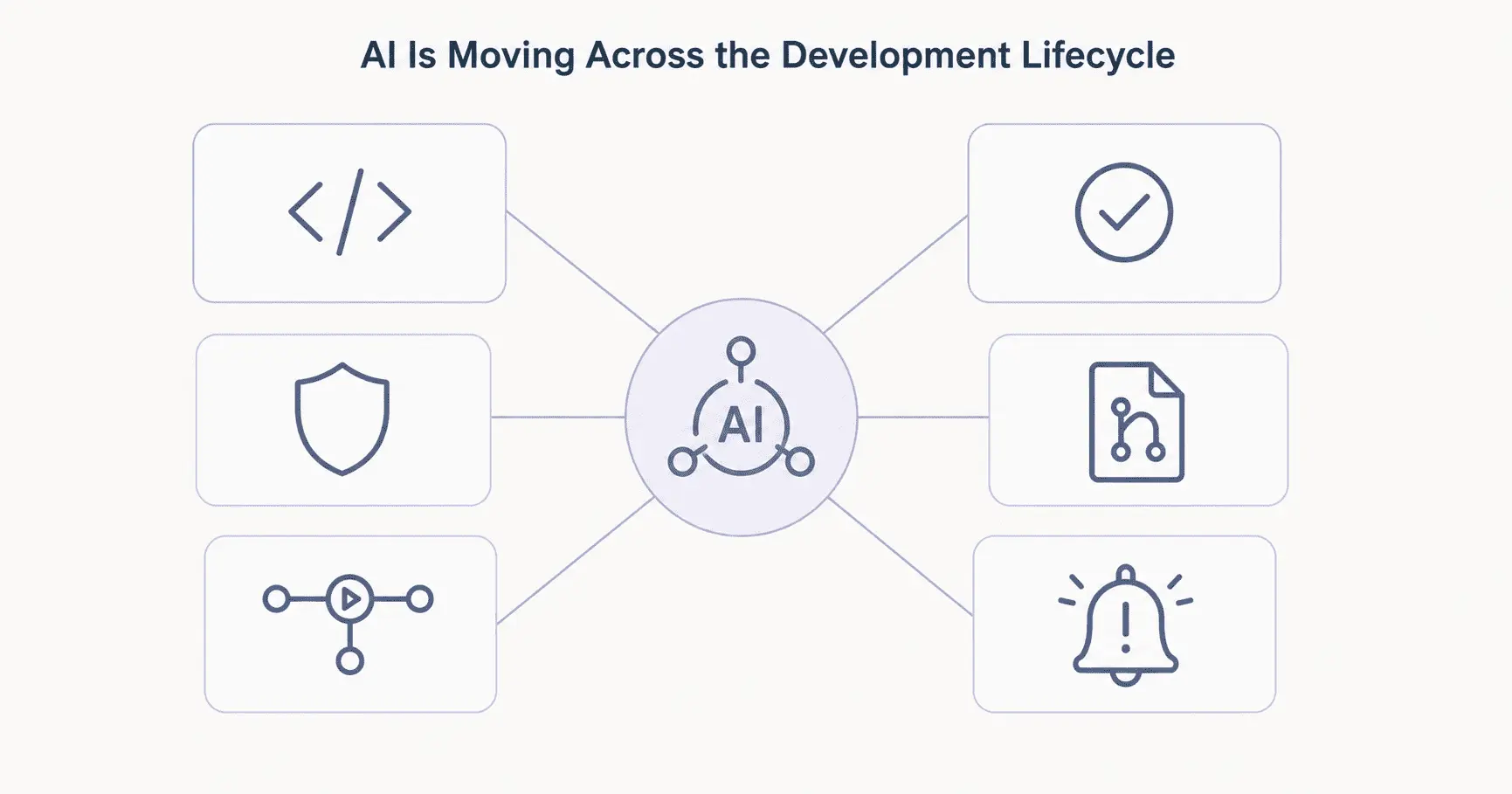
AI is beginning to participate in almost every stage of software development. It can inspect repositories, plan changes across multiple files, generate tests, review code, debug failures and increasingly take actions through coding agents. Outside the IDE, the same shift is reaching deployment, infrastructure and production operations.AI 正开始参与软件开发的几乎每一个阶段。它可以检查代码库、规划跨文件的变更、生成测试、审查代码、调试故障,并越来越多地通过编码智能体(Coding Agents)采取行动。在 IDE 之外,同样的转变也正在延伸至部署、基础设施和生产运维领域。
The adoption numbers explain why this matters. HackerRank’s 2025 Developer Skills Report found that 97% of surveyed developers use at least one AI assistant, while developers estimated that AI generates an average of 29% of their code.采用率数据说明了其重要性。HackerRank 的《2025 开发者技能报告》显示,97% 的受访开发者至少使用一种 AI 助手,而开发者估计 AI 平均生成了他们 29% 的代码。
JetBrains’ 2025 Developer Ecosystem Survey, which included 24,534 developers across 194 countries and regions, found that 85% regularly use AI tools for coding and development.JetBrains 的《2025 开发者生态系统调查》涵盖了 194 个国家和地区的 24,534 名开发者,结果显示 85% 的人定期在编码和开发中使用 AI 工具。
But the interesting story in 2026 isn’t simply that more developers use AI. It’s that the relationship between the developer and the AI is changing. We are moving from AI that answers questions to AI that performs work.但 2026 年最有趣的故事不仅仅是更多的开发者在使用 AI,而是开发者与 AI 之间的关系正在发生变化。我们正从“回答问题的 AI”转向“执行工作的 AI”。
That shift is already changing what individual developers can build. Indie developers and small teams can now prototype products at a speed that would have required considerably more time and people only a few years ago. We’ve previously looked at how indie developers and solo founders are using AI to launch products much faster, but the same transformation is now reaching professional engineering workflows.这种转变正在改变个体开发者能够构建的内容。独立开发者和小团队现在可以以几年前需要更多时间和人力才能达到的速度进行产品原型设计。我们之前探讨过独立开发者和独立创始人如何利用 AI 更快地发布产品,而同样的变革现在也正在触及专业的工程工作流。
Here are the AI trends developers should pay closest attention to in 2026.以下是 2026 年开发者应重点关注的 AI 趋势。
Trend 1: Coding Assistants Are Becoming Coding Agents趋势 1:编码助手正在演变为编码智能体
The first major change is happening inside the development environment itself. Traditional coding assistants operate reactively. You start writing code and they suggest the next few lines. You ask a question and they provide an answer. You paste an error and they suggest a possible fix.第一个重大变化发生在开发环境内部。传统的编码助手是被动工作的:你开始写代码,它们建议接下来的几行;你提出问题,它们提供答案;你粘贴错误,它们建议可能的修复方案。
Coding agents work differently.编码智能体的工作方式则不同。
Instead of asking an agent to write a function, you can give it a broader objective such as add authentication to this application. The agent can inspect the repository, identify the relevant files, plan the implementation, modify multiple parts of the codebase, run tests and iterate when something fails. That changes the unit of work being delegated to AI.你不再是要求智能体编写一个函数,而是可以给它一个更广泛的目标,例如“为该应用添加身份验证”。智能体可以检查代码库、识别相关文件、规划实现方案、修改代码的多个部分、运行测试,并在出错时进行迭代。这改变了委派给 AI 的工作单元。
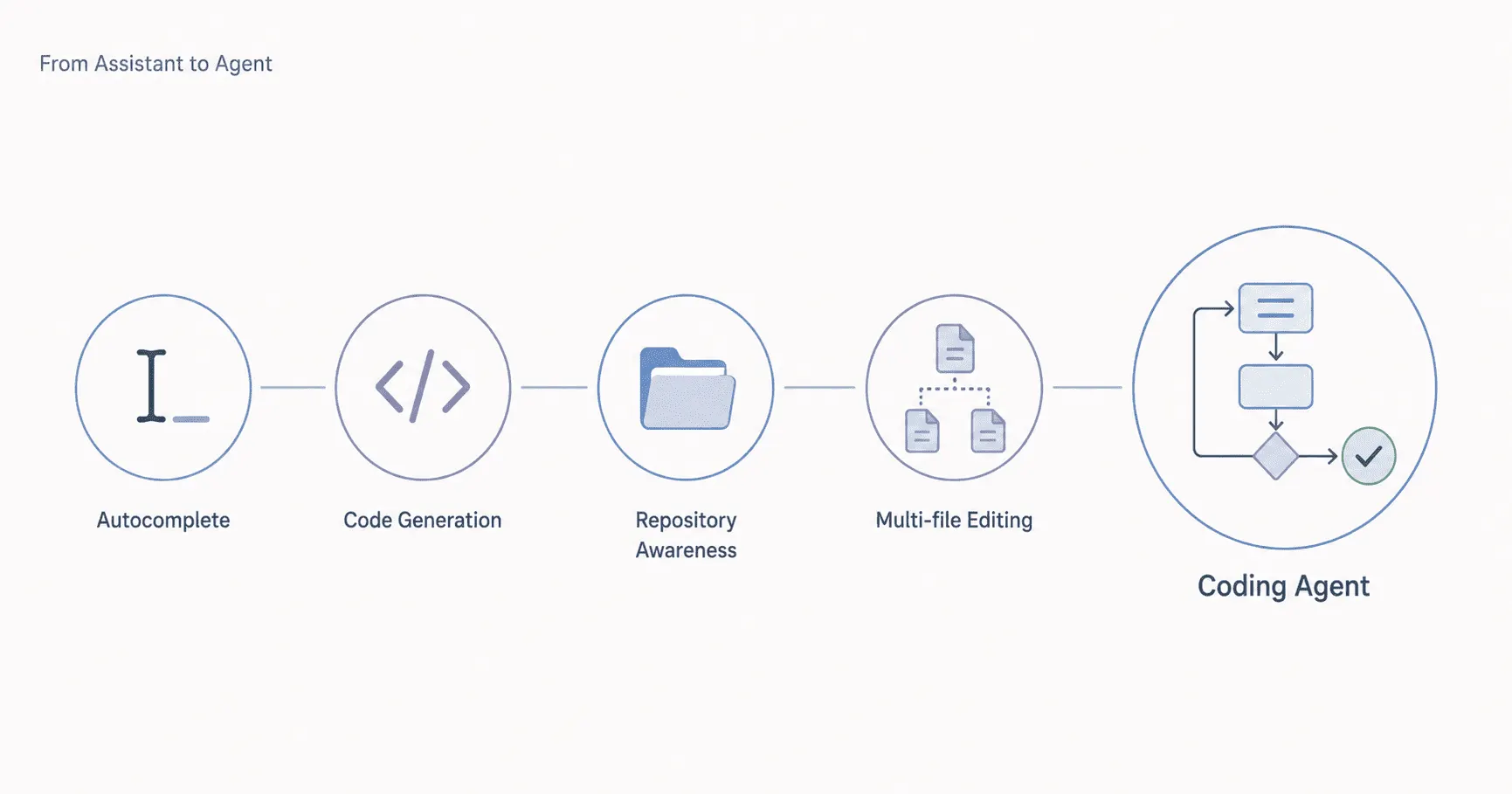
The progression looks roughly like this:其演进过程大致如下:
Autocomplete → Code generation → Repository awareness → Multi-file editing → Autonomous task execution自动补全 → 代码生成 → 代码库感知 → 多文件编辑 → 自主任务执行
A developer no longer needs to manually copy generated code from a chat window into five different files. Modern agentic tools can increasingly work directly with the repository and development environment.开发者不再需要手动将生成的代码从聊天窗口复制到五个不同的文件中。现代智能体工具正越来越多地直接与代码库和开发环境协作。
This doesn’t make developers unnecessary. In many cases, it makes engineering judgment more important. Someone still has to decide whether the implementation fits the architecture, whether authentication has been handled securely, whether a generated database migration could destroy existing data, and whether an agent solved the actual requirement rather than merely producing code that appears to work.这并没有让开发者变得多余。在许多情况下,它反而让工程判断变得更加重要。依然需要有人来决定实现方案是否符合架构、身份验证是否处理得当、生成的数据库迁移是否会破坏现有数据,以及智能体解决的是否是真正的需求,还是仅仅生成了看起来能运行的代码。
This is why the most useful way to think about AI-assisted software development is not as automated programming, but as a new division of labor. AI can take on more implementation work while developers retain responsibility for architecture, constraints, review and production quality.这就是为什么将 AI 辅助软件开发视为一种新的劳动分工,而不是自动编程,是最有意义的思考方式。AI 可以承担更多的实现工作,而开发者则保留对架构、约束、审查和生产质量的责任。
The impact is particularly visible among small teams. When one developer can delegate boilerplate, refactoring, documentation and portions of testing to AI, the amount that can be built by a tiny engineering team changes dramatically. That is also one reason solo founders are increasingly building SaaS products without traditional development teams.这种影响在小团队中尤为明显。当一名开发者可以将样板代码、重构、文档和部分测试委派给 AI 时,小型工程团队能够构建的内容将发生巨大变化。这也是为什么越来越多的独立创始人能够在没有传统开发团队的情况下构建 SaaS 产品的原因之一。
The important question for 2026 is therefore no longer, “Can AI write code?” It clearly can. The better question is, “How much of a development task can we safely delegate before human supervision becomes necessary?”因此,2026 年的重要问题不再是“AI 能写代码吗?”(它显然能)。更好的问题是:“在需要人工监督之前,我们能安全地委派多少开发任务?”
Trend 2: Agentic AI Is Expanding Across the Software Lifecycle趋势 2:智能体 AI 正在扩展至整个软件生命周期
Coding agents are part of a larger shift toward agentic AI. An assistant typically responds to a request. An agent can work toward an objective over several steps, use tools, observe the result of an action and decide what to do next.编码智能体是向智能体 AI 更大转变的一部分。助手通常是响应请求,而智能体可以在多个步骤中朝着目标工作、使用工具、观察行动结果并决定下一步做什么。
For developers, that opens up much more than code generation. Imagine a bug report arriving with a reproducible error. An AI assistant might suggest five possible causes. An agent could inspect the issue, search the repository, reproduce the error, trace it to a particular component, modify the code, run the relevant tests and prepare a pull request for review.对于开发者来说,这开启了远不止代码生成的功能。想象一下,一个带有可复现错误的错误报告出现了。AI 助手可能会建议五个可能的原因,而智能体则可以检查该问题、搜索代码库、复现错误、追踪到特定组件、修改代码、运行相关测试并准备好合并请求(Pull Request)以供审查。
The same pattern can appear across the software lifecycle. A testing agent could generate edge cases and run them. A review agent could inspect a pull request before a human reviewer opens it. A security agent could look for suspicious dependencies or vulnerable patterns. An incident-response agent could inspect logs and telemetry when an application starts failing.同样的模式可以出现在整个软件生命周期中。测试智能体可以生成边缘情况并运行它们;审查智能体可以在人工审核员打开合并请求之前进行检查;安全智能体可以查找可疑依赖或易受攻击的模式;事件响应智能体可以在应用开始故障时检查日志和遥测数据。
Google’s 2025 DORA research offers an important perspective on what happens next. Based on research involving nearly 5,000 technology professionals, DORA describes AI as an amplifier of an organization’s existing capabilities.Google 2025 年的 DORA 研究为接下来会发生什么提供了一个重要的视角。基于对近 5000 名技术专业人员的研究,DORA 将 AI 描述为组织现有能力的放大器。
That’s a useful way for developers to think about agents. A strong engineering team with good tests, clean documentation, sensible architecture and fast feedback loops gives an AI agent a good environment in which to operate. A chaotic codebase with weak tests and undocumented dependencies gives the same agent much less reliable context.对于开发者来说,这是思考智能体的有效方式。一个拥有良好测试、清晰文档、合理架构和快速反馈循环的强大工程团队,能为 AI 智能体提供良好的运行环境。而一个测试薄弱、依赖关系混乱且缺乏文档的代码库,则无法为同一个智能体提供可靠的上下文。
AI can accelerate the system around it, but it doesn’t automatically repair the fundamentals.AI 可以加速其周围的系统,但它不会自动修复基础问题。
That makes seemingly traditional decisions architecture, database design, framework selection and infrastructure just as important in an AI-heavy development environment. If you’re deciding those foundations for a new project, this guide to choosing the right technology stack is a useful starting point.这使得架构、数据库设计、框架选择和基础设施等看似传统的决策,在 AI 密集型开发环境中显得同样重要。如果你正在为新项目确定这些基础,这份选择正确技术栈的指南是一个有用的起点。
The best AI workflows in 2026 will probably not be the ones with the most agents. They will be the ones where agents have clear responsibilities, good context and well-defined boundaries.2026 年最优秀的 AI 工作流可能不是拥有最多智能体的工作流,而是那些智能体职责明确、上下文充足且边界定义清晰的工作流。
Trend 3: AI Is Moving Beyond Coding and Into DevOps趋势 3:AI 正在超越编码,进入 DevOps 领域
Generating an application is not the same as running one. Every developer eventually encounters the gap between “it works on my machine” and “it works reliably for real users.”生成一个应用程序与运行一个应用程序是两码事。每位开发者最终都会遇到“在我的机器上能运行”与“为真实用户可靠运行”之间的鸿沟。
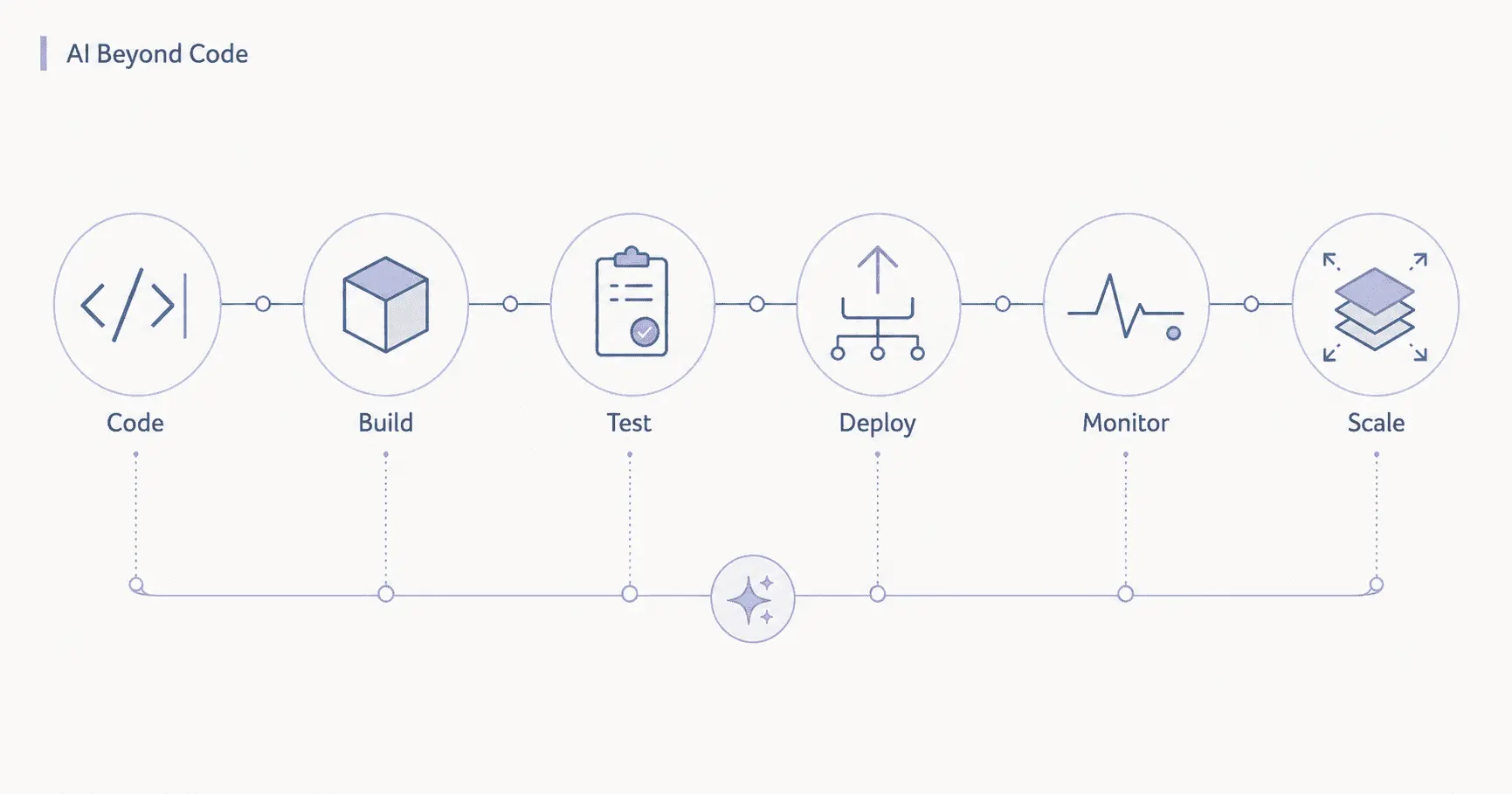
A production application has to be built, configured, deployed, monitored, updated and sometimes scaled. When something breaks, someone has to understand what happened.生产环境中的应用程序必须经过构建、配置、部署、监控、更新,有时还需要扩容。当出现故障时,必须有人理解发生了什么。
That operational layer is becoming another major area for AI. We are already seeing AI applied to build configuration, CI/CD troubleshooting, infrastructure provisioning, log analysis, anomaly detection and incident investigation. Instead of only helping developers create software, AI is beginning to help them operate it.这一运维层正在成为 AI 的另一个主要领域。我们已经看到 AI 被应用于构建配置、CI/CD 故障排查、基础设施供应、日志分析、异常检测和事件调查。AI 不再仅仅帮助开发者创建软件,也开始帮助他们运维软件。
Traditional DevOps automation is largely deterministic: an engineer defines a workflow and the automation executes it. Agentic systems introduce reasoning into that workflow. An agent can potentially inspect an application’s architecture, understand which resources it needs, perform deployment tasks and react to what happens afterward.传统的 DevOps 自动化很大程度上是确定性的:工程师定义工作流,自动化执行它。而智能体系统将推理引入了该工作流。智能体可以检查应用程序的架构、理解它所需的资源、执行部署任务,并对后续发生的情况做出反应。
The evolution of AI in DevOps could be particularly important for smaller engineering teams, where developers often have to handle application code and infrastructure at the same time.AI 在 DevOps 中的演进对于小型工程团队尤为重要,因为这些团队的开发者往往需要同时处理应用程序代码和基础设施。
Google’s DORA research also highlights how important the surrounding platform has become. Its 2025 findings reported that 90% of surveyed organizations had adopted at least one internal platform, while 76% had dedicated platform teams.Google 的 DORA 研究也强调了周边平台的重要性。其 2025 年的研究结果显示,90% 的受访组织至少采用了一个内部平台,76% 的组织拥有专门的平台团队。
The next step is likely to be making those platforms increasingly intelligent.下一步很可能是让这些平台变得越来越智能化。
Instead of developers manually moving between source control, build systems, infrastructure dashboards, monitoring tools and logs, AI agents can potentially carry context across those systems.开发者不必再手动在源代码控制、构建系统、基础设施仪表板、监控工具和日志之间切换,AI 智能体可以跨系统携带上下文信息。
That doesn’t mean handing unrestricted production access to an autonomous model. It means moving toward infrastructure where more operational work can be reasoned about and automated while developers remain in control of important decisions.这并不意味着将不受限制的生产环境访问权限交给一个自主模型,而是意味着向一种基础设施迈进:更多的运维工作可以被推理和自动化,同时开发者仍然掌控重要的决策。
Trend 4: Generating Code Is Getting Easier. Verifying It Is Not.趋势 4:代码生成变得容易,但验证代码却并非如此
AI has created an unusual engineering problem: producing code is becoming much cheaper than proving that the code is correct.AI 制造了一个不同寻常的工程问题:编写代码的成本变得远低于证明代码正确性的成本。
HackerRank’s research found that developers estimate AI already generates 29% of their code on average. Some developers report considerably higher proportions. But an AI model can generate syntactically perfect code that is still wrong.HackerRank 的研究发现,开发者估计 AI 平均已经生成了他们 29% 的代码,一些开发者报告的比例甚至更高。但 AI 模型可以生成语法完美却逻辑错误的代码。
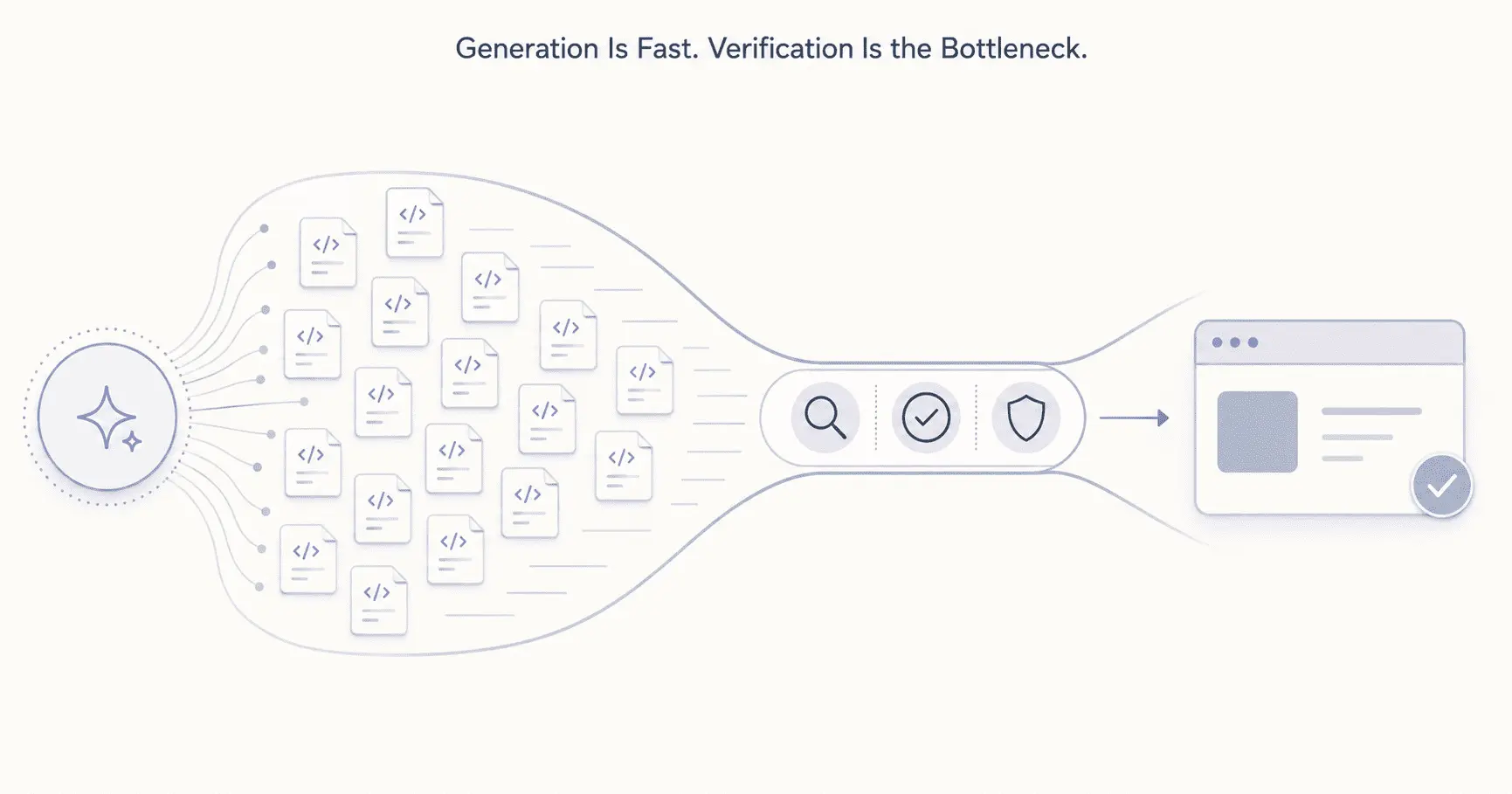
It can misunderstand a business rule, use an outdated API, introduce a dependency that doesn’t exist, overlook an authorization problem or implement a solution that works for the obvious case while failing on edge cases.它可以误解业务规则、使用过时的 API、引入不存在的依赖项、忽略授权问题,或者实现了一个在显而易见的情况下能运行但在边缘情况下会失败的方案。
That means the bottleneck in software development may gradually move. For decades, writing the implementation was one of the expensive parts of development. If AI dramatically reduces that cost, review, testing and verification become proportionally more important.这意味着软件开发的瓶颈可能会逐渐转移。几十年来,编写实现代码是开发中最昂贵的部分之一。如果 AI 大幅降低了这一成本,那么审查、测试和验证的重要性就会相应增加。
This is why developers should be careful with productivity metrics based on generated code. Producing 800 lines in five minutes isn’t valuable if an engineer then spends three hours figuring out why those lines fail in production.这就是为什么开发者应对基于生成代码的生产力指标持谨慎态度。如果工程师随后要花三个小时去找出为什么这些代码在生产环境中会失败,那么在五分钟内产出 800 行代码就没有价值。
The better workflow is to treat AI-generated code like a contribution from a very fast developer who doesn’t fully understand your product. Review the logic. Run the tests. Inspect dependencies. Check security-sensitive paths. Confirm assumptions.更好的工作流是将 AI 生成的代码视为来自一位非常快速但并不完全了解你产品的开发者的贡献。审查逻辑、运行测试、检查依赖项、核对安全敏感路径、确认假设。
For teams using AI heavily, a structured process for auditing AI-generated code is becoming less of a nice-to-have and more of an ordinary engineering practice.对于大量使用 AI 的团队来说,建立一套审计 AI 生成代码的结构化流程正变得越来越重要,不再是“锦上添花”,而是日常工程实践的一部分。
In other words, AI may reduce the cost of typing code while increasing the value of knowing whether code should exist in the first place.换句话说,AI 可能会降低编写代码的成本,同时增加判断代码是否有必要存在这一行为的价值。
Trend 5: Testing and Code Review Are Becoming AI’s Next Big Jobs趋势 5:测试和代码审查正成为 AI 的下一个大任务
The natural response to more AI-generated code is more AI-assisted verification. Testing is particularly well suited to AI because a large amount of testing work is systematic. Given a function and its expected behavior, a model can suggest normal cases, boundary conditions and unusual inputs a developer may not immediately consider.面对越来越多的 AI 生成代码,自然的反应是更多的 AI 辅助验证。测试尤其适合 AI,因为大量的测试工作是系统性的。给定一个函数及其预期行为,模型可以建议开发者可能不会立即考虑到的正常情况、边界条件和异常输入。
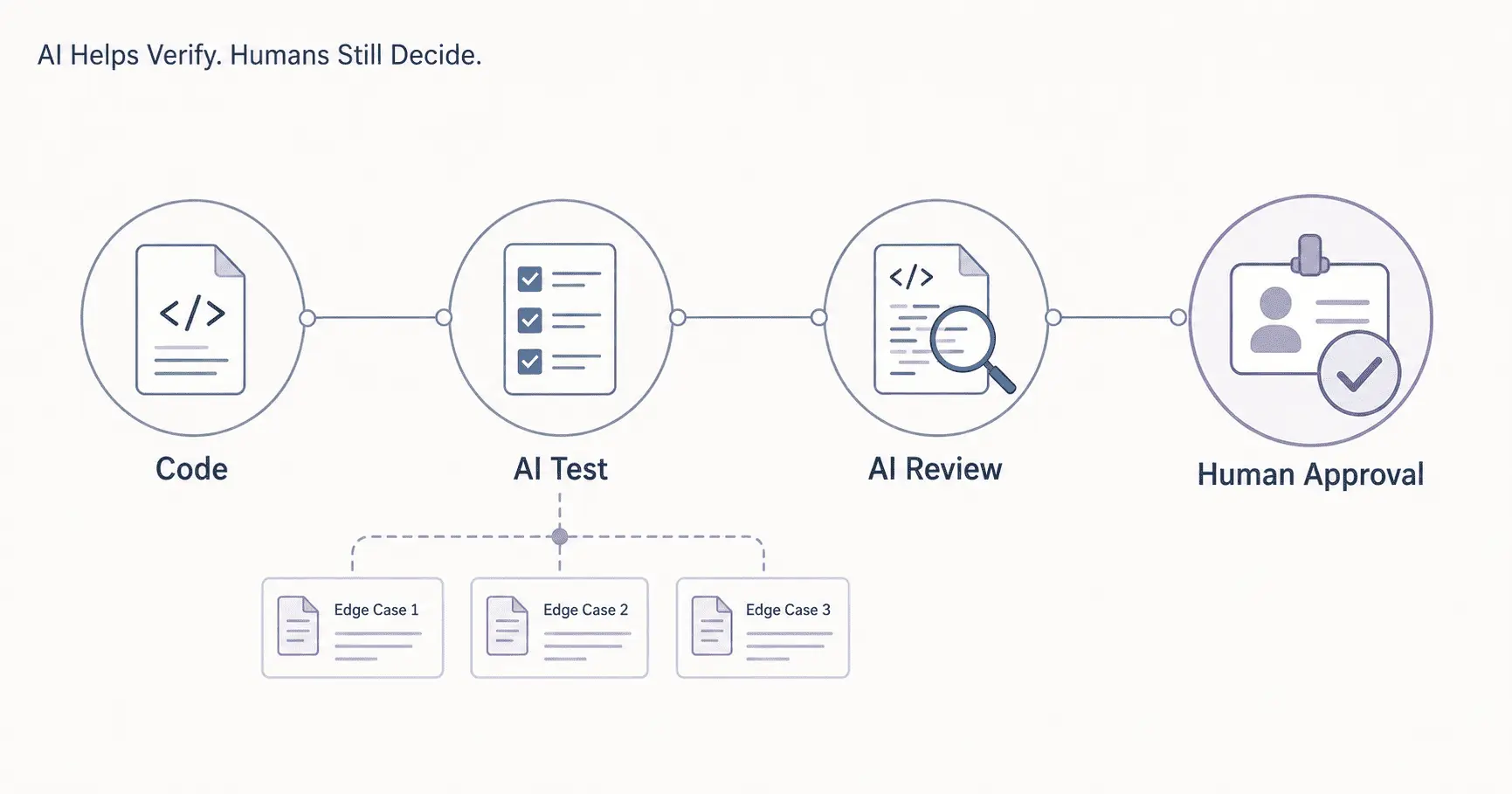
The same applies to code review. AI can summarize a large pull request, identify suspicious changes, point out duplicated logic, explain unfamiliar code and highlight potential vulnerabilities before a human reviewer begins.代码审查也是如此。AI 可以在人工审核员开始工作前,总结大型合并请求、识别可疑变更、指出重复逻辑、解释不熟悉的代码并突出潜在漏洞。
This doesn’t eliminate human review. It changes what the reviewer spends time on. Instead of using 20 minutes to understand what a pull request changed, an engineer can start with an AI-generated summary and spend more time asking higher-value questions: Is this architecture sensible? Does this behavior match the product requirement? What happens if this dependency fails?这并不能消除人工审查,而是改变了审核员投入时间的方式。工程师不必花费 20 分钟去理解合并请求改了什么,而是可以从 AI 生成的摘要开始,花更多时间提出更高价值的问题:架构合理吗?行为符合产品需求吗?如果这个依赖项失效会怎样?
Over time, we may see a common workflow emerge:随着时间的推移,我们可能会看到一种常见的工作流出现:
AI generates → AI tests → AI reviews → Human approvesAI 生成 → AI 测试 → AI 审查 → 人工批准
The human remains important because correctness in software isn’t purely technical. A test suite can tell you that the implementation matches its expected behavior. It cannot always tell you that the expected behavior itself is the right product decision.人工依然很重要,因为软件的正确性不仅仅是技术问题。测试套件可以告诉你实现是否符合预期行为,但它并不总能告诉你“预期行为”本身是否是正确的产品决策。
Trend 6: Developers Are Building AI Tool Stacks趋势 6:开发者正在构建 AI 工具栈
There probably won’t be one AI tool that wins every part of software development. HackerRank found that 61% of developers already use two or more AI tools at work. That makes sense because different models and products are good at different jobs.可能不会有一种 AI 工具能胜任软件开发的每一个环节。HackerRank 发现 61% 的开发者在工作中已经使用两种或更多的 AI 工具。这是合理的,因为不同的模型和产品擅长不同的工作。
A developer might use one AI system for research and architecture questions, an IDE-integrated assistant for everyday coding, a repository-aware agent for larger tasks and another tool for reviewing pull requests.开发者可能会使用一个 AI 系统处理研究和架构问题,使用一个集成在 IDE 中的助手进行日常编码,使用一个具备代码库感知能力的智能体处理大型任务,并使用另一个工具审查合并请求。
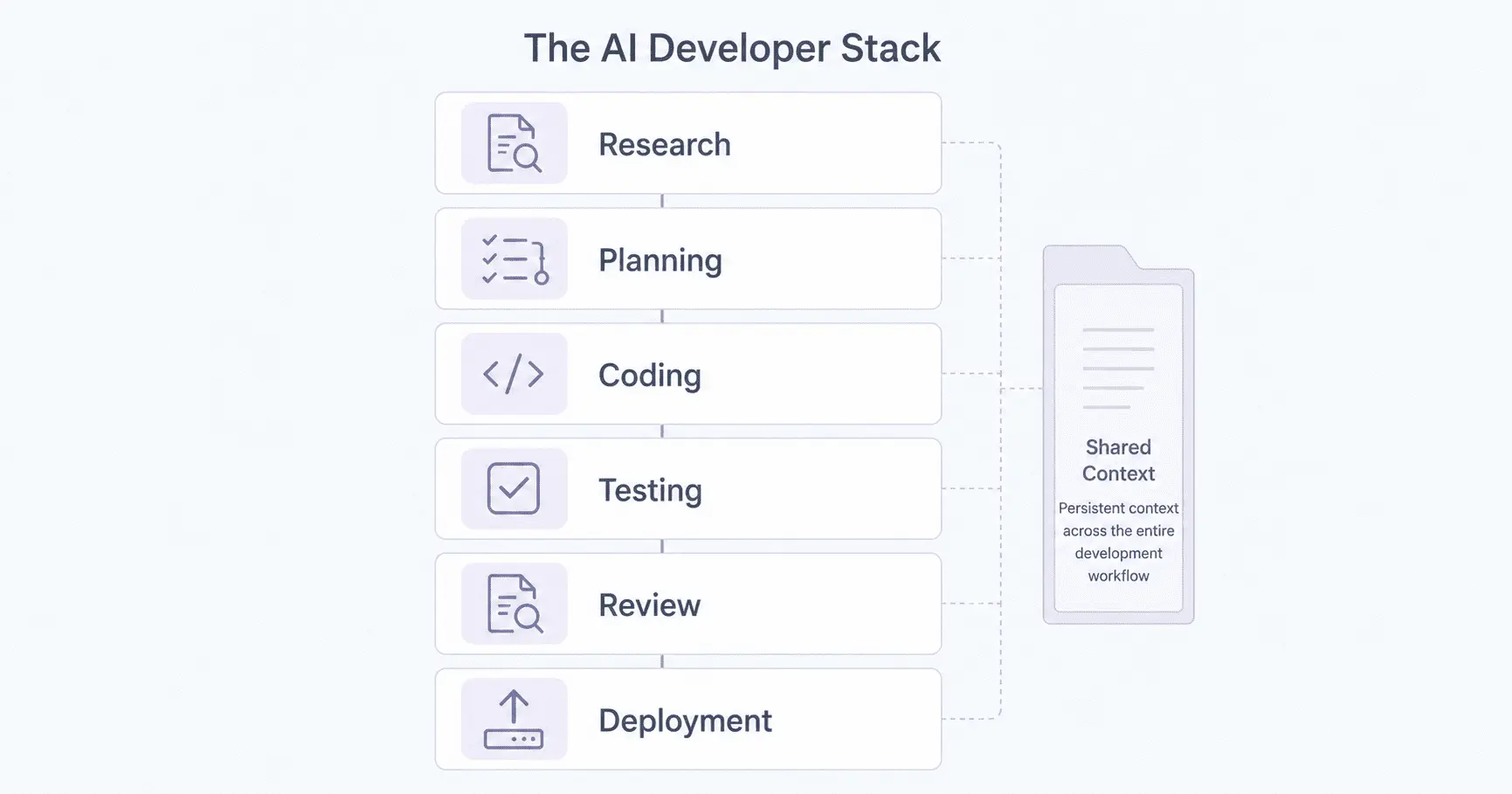
AI is therefore becoming a new layer of the developer stack rather than a single application. This creates a new optimization problem: context.因此,AI 正在成为开发者技术栈的新的一层,而不是单一的应用程序。这产生了一个新的优化问题:上下文。
Switching between five AI tools isn’t useful if each one knows nothing about what happened in the others. The more development becomes agentic, the more valuable persistent project context, documentation and clear specifications become.如果每个 AI 工具都不知道其他工具中发生了什么,那么在五个 AI 工具之间切换就没有意义。开发越是智能化,持久的项目上下文、文档和清晰的规范就越有价值。
Good documentation may actually become more valuable in the AI era, because documentation isn’t only read by humans anymore. It becomes a context that agents can use to understand how a system is supposed to behave.良好的文档在 AI 时代可能实际上变得更有价值,因为文档不再仅仅是给人类阅读的。它成为了智能体可以用来理解系统应如何运行的上下文。
Trend 7: Vibe Coding Is Growing, but Production Engineering Isn’t Going Away趋势 7:“氛围编程”(Vibe Coding)正在增长,但生产工程不会消失
Few phrases have spread through developer culture as quickly as “vibe coding.” The appeal is obvious. Describe what you want, let AI generate the implementation, run it, paste the errors back into the model and keep iterating until the application works.很少有短语像“氛围编程”这样在开发者文化中传播得如此迅速。其吸引力显而易见:描述你想要的,让 AI 生成实现,运行它,将错误粘贴回模型,然后不断迭代直到应用程序正常工作。
For prototypes, experiments and internal tools, this can be incredibly effective. The problem begins when a working prototype is mistaken for production-ready software.对于原型、实验和内部工具,这可能非常有效。但当把可工作的原型误认为是生产就绪的软件时,问题就出现了。
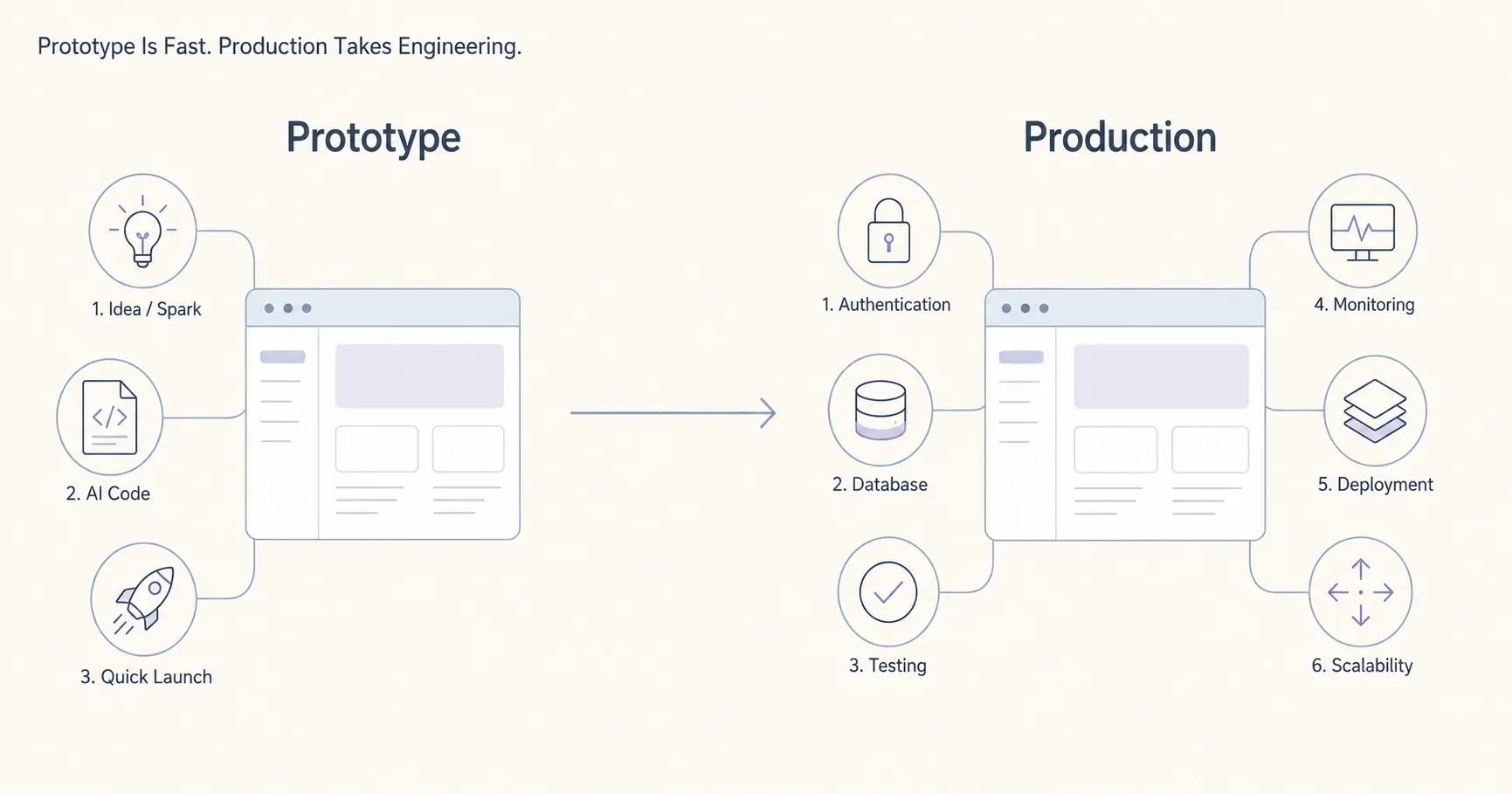
A generated application can look finished while hiding serious problems underneath. Authentication may be implemented incorrectly. Database migrations may be unsafe. Error handling may be incomplete. Secrets may be exposed. Dependencies may have known vulnerabilities. The application may work with ten users and fall apart with ten thousand.生成的应用程序看起来可能已经完成,但其底层可能隐藏着严重的问题:身份验证可能实现错误、数据库迁移可能不安全、错误处理可能不完整、密钥可能被泄露、依赖项可能有已知漏洞。应用程序在十个用户使用时可能正常,但在万人使用时就会崩溃。
AI has compressed the distance between idea and prototype. It hasn’t eliminated the distance between prototype and reliable production system. That is likely to become one of the defining engineering lessons of 2026.AI 压缩了从想法到原型的距离,但它并没有消除从原型到可靠生产系统之间的距离。这很可能成为 2026 年最具定义的工程经验之一。
The developers who thrive won’t necessarily reject vibe coding. They’ll understand when speed is more important than rigor and when the balance needs to reverse.能够脱颖而出的开发者不一定会拒绝“氛围编程”。他们会明白什么时候速度比严谨更重要,以及什么时候需要反过来平衡。
Use AI aggressively when exploring an idea. Become much more deliberate when users, money, private data and production infrastructure enter the picture.在探索想法时积极使用 AI,而在涉及用户、资金、私有数据和生产基础设施时,则要谨慎得多。
Trend 8: AI Productivity Is Creating Higher Expectations趋势 8:AI 生产力正在创造更高的期望
AI tools are marketed around productivity, and developers do report real gains. HackerRank found that 85% of developers say AI helps them complete projects faster.AI 工具围绕生产力进行营销,开发者确实报告了实际的收益。HackerRank 发现 85% 的开发者表示 AI 帮助他们更快地完成了项目。
But the same research uncovered a less discussed consequence: 67% say AI has increased pressure to deliver faster.但同一项研究揭示了一个较少讨论的后果:67% 的人表示 AI 增加了交付速度的压力。
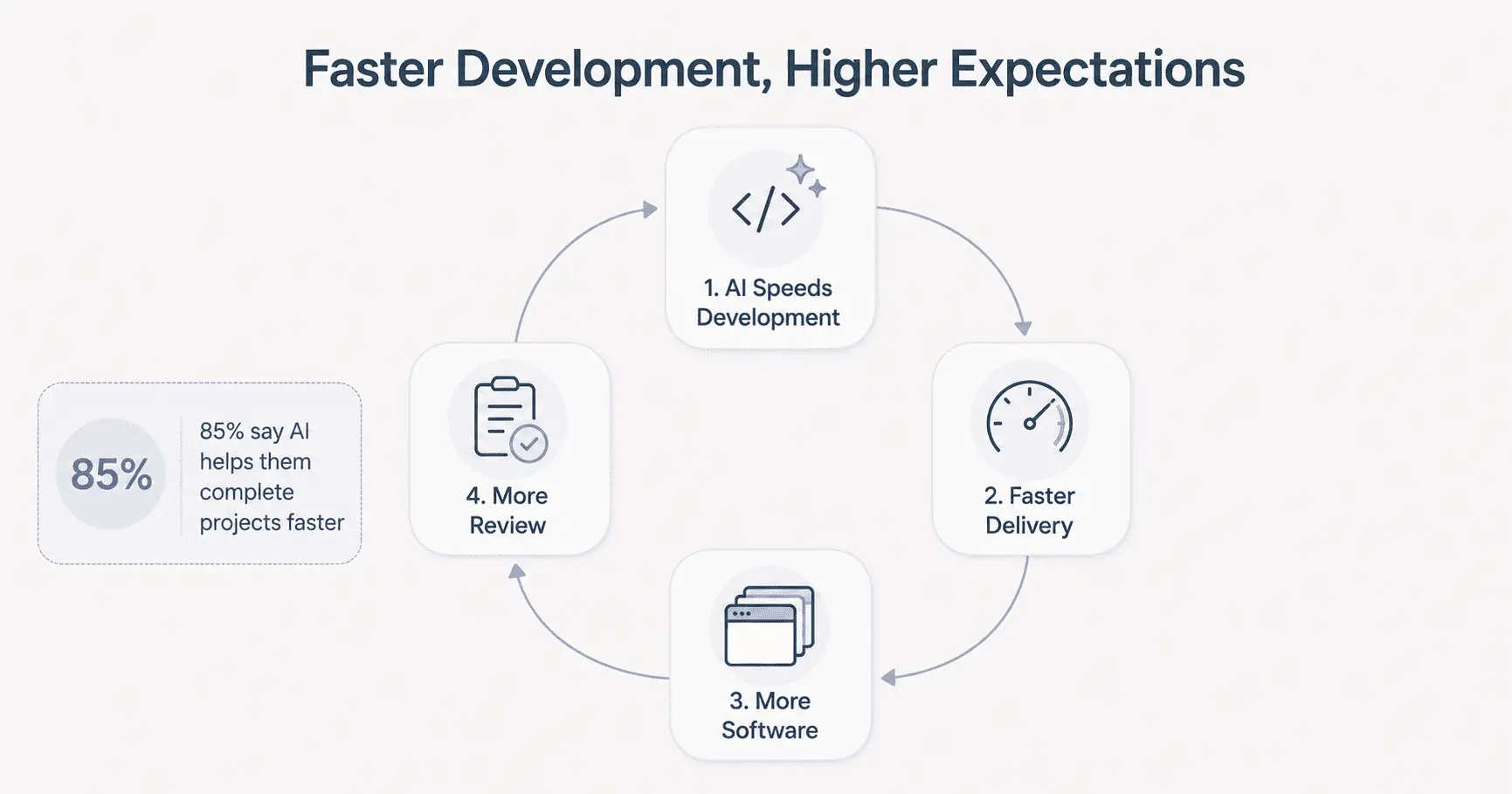
That may be one of the most important developer trends hidden inside the AI boom. When a task that previously took two days can be completed in one, organizations don’t necessarily give developers the second day back. The new speed can become the new expectation.这可能是 AI 热潮中隐藏的最重要的开发者趋势之一。当以前需要两天完成的任务现在一天就能完成时,组织并不一定会把那一天还给开发者。新的速度可能变成了新的期望。
That creates a cycle: AI accelerates development… Teams expect faster releases… More software gets produced… More software needs review… testing and maintenance. Expectations rise again.这产生了一个循环:AI 加速了开发……团队期望更快的发布……生产了更多的软件……更多的软件需要审查、测试和维护……期望再次上升。
So the productivity conversation needs to mature. The number of lines generated isn’t productivity. Neither is the number of prompts sent or pull requests opened.因此,关于生产力的对话需要成熟起来。生成的代码行数不是生产力,发送的提示词数量或打开的合并请求数量也不是。
Useful measures are closer to outcomes: lead time, defect rate, deployment reliability, recovery time, customer impact and the amount of engineering time spent maintaining what was shipped.有用的衡量标准更接近于结果:交付周期、缺陷率、部署可靠性、恢复时间、客户影响以及维护已发布内容所花费的工程时间。
The real promise of AI isn’t simply that developers can produce more software. It is that developers can spend less time on repetitive implementation and more time solving the difficult parts of engineering.AI 的真正前景不仅仅是开发者可以产出更多的软件,而是开发者可以减少在重复性实现上花费的时间,并将更多时间用于解决工程中的难点。
Trend 9: Security Is Becoming an AI Development Skill趋势 9:安全性正成为一项 AI 开发技能
Coding agents also create a security problem that ordinary autocomplete tools didn’t have. An autocomplete model suggests text. An agent may be able to read your repository, modify files, execute terminal commands, call external tools or interact with infrastructure.编码智能体也带来了普通自动补全工具所没有的安全问题。自动补全模型建议的是文本,而智能体可能能够读取你的代码库、修改文件、执行终端命令、调用外部工具或与基础设施交互。
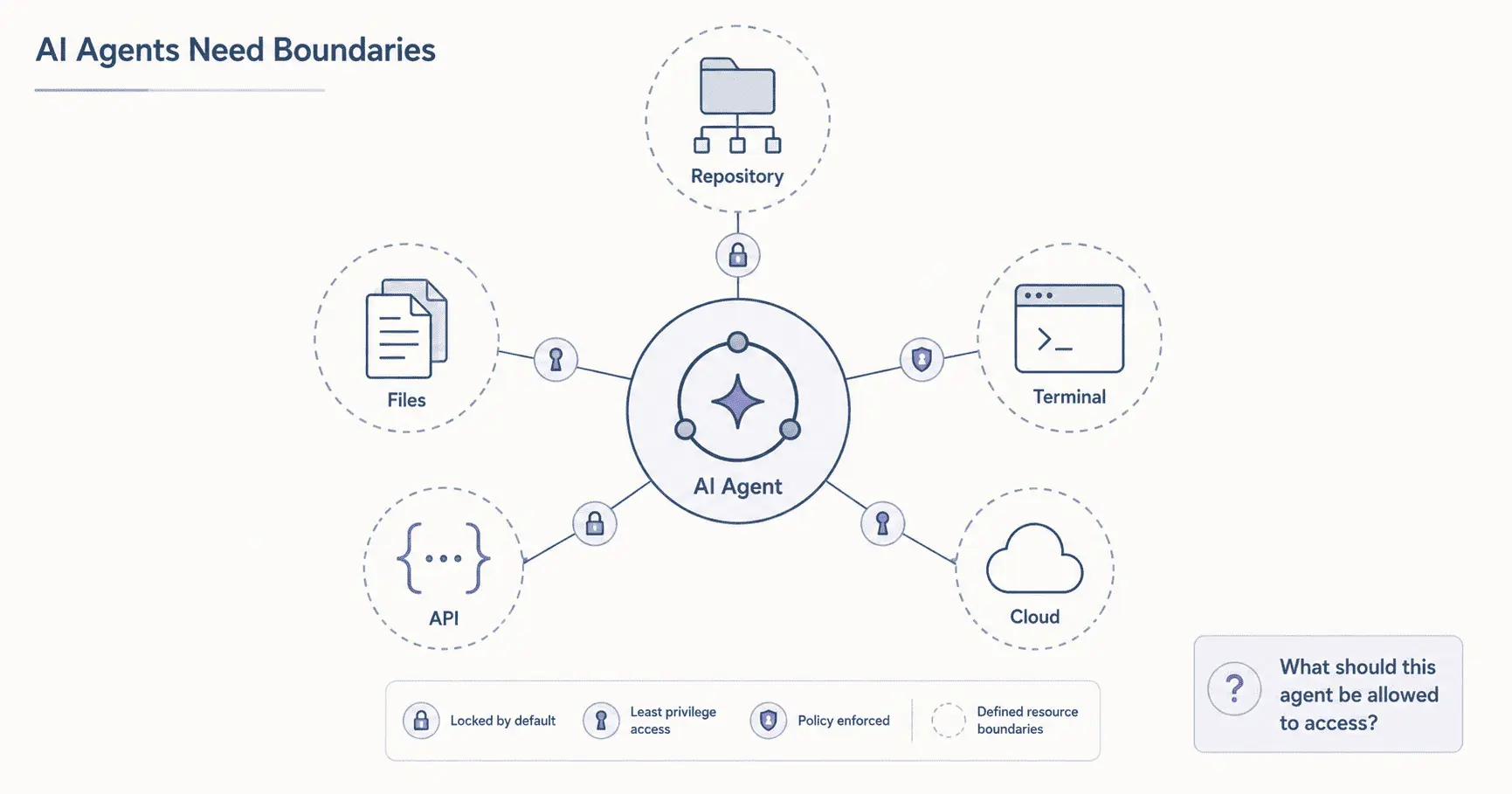
The security question therefore changes from: “Is this generated code safe?”因此,安全问题从“这段生成的代码安全吗?”
To: “What is this AI system allowed to see and do?”转变为:“这个 AI 系统被允许看到和做什么?”
Developers need to think carefully about permissions, credentials and data exposure. A code-review agent probably doesn’t need production database access. A documentation agent shouldn’t need deployment permissions. An agent fixing a frontend bug probably doesn’t need every secret in the repository.开发者需要仔细考虑权限、凭据和数据暴露问题。代码审查智能体可能不需要生产数据库访问权限,文档智能体不应需要部署权限,修复前端错误的智能体可能不需要代码库中的所有密钥。
There are also less obvious risks. Models can hallucinate package names. AI-generated code can introduce vulnerable dependencies. Proprietary source code may be sent to third-party services without developers fully understanding the data policy.还有一些不太明显的风险:模型可能会产生包名幻觉;AI 生成的代码可能会引入易受攻击的依赖项;专有源代码可能会在开发者未完全了解数据政策的情况下被发送到第三方服务。
These aren’t reasons to avoid AI. They’re reasons to treat AI tooling as part of the software supply chain.这些不是避免使用 AI 的理由,而是将 AI 工具视为软件供应链一部分的理由。
Just as developers evaluate libraries, CI/CD services and cloud infrastructure, teams increasingly need to evaluate what their AI tools can access, where data goes and what actions an agent can execute without approval.正如开发者评估库、CI/CD 服务和云基础设施一样,团队越来越需要评估他们的 AI 工具可以访问什么、数据流向哪里,以及智能体在未经批准的情况下可以执行什么操作。
Trend 10: The Developer’s Role Is Shifting From Writer to Orchestrator趋势 10:开发者的角色正从“编写者”转变为“编排者”
The most interesting consequence of all these trends may be what happens to the developer’s job itself. When AI can generate syntax quickly, syntax becomes less valuable as a differentiator.所有这些趋势中最有趣的后果可能是开发者自身工作的变化。当 AI 可以快速生成语法时,语法作为差异化因素的价值就降低了。
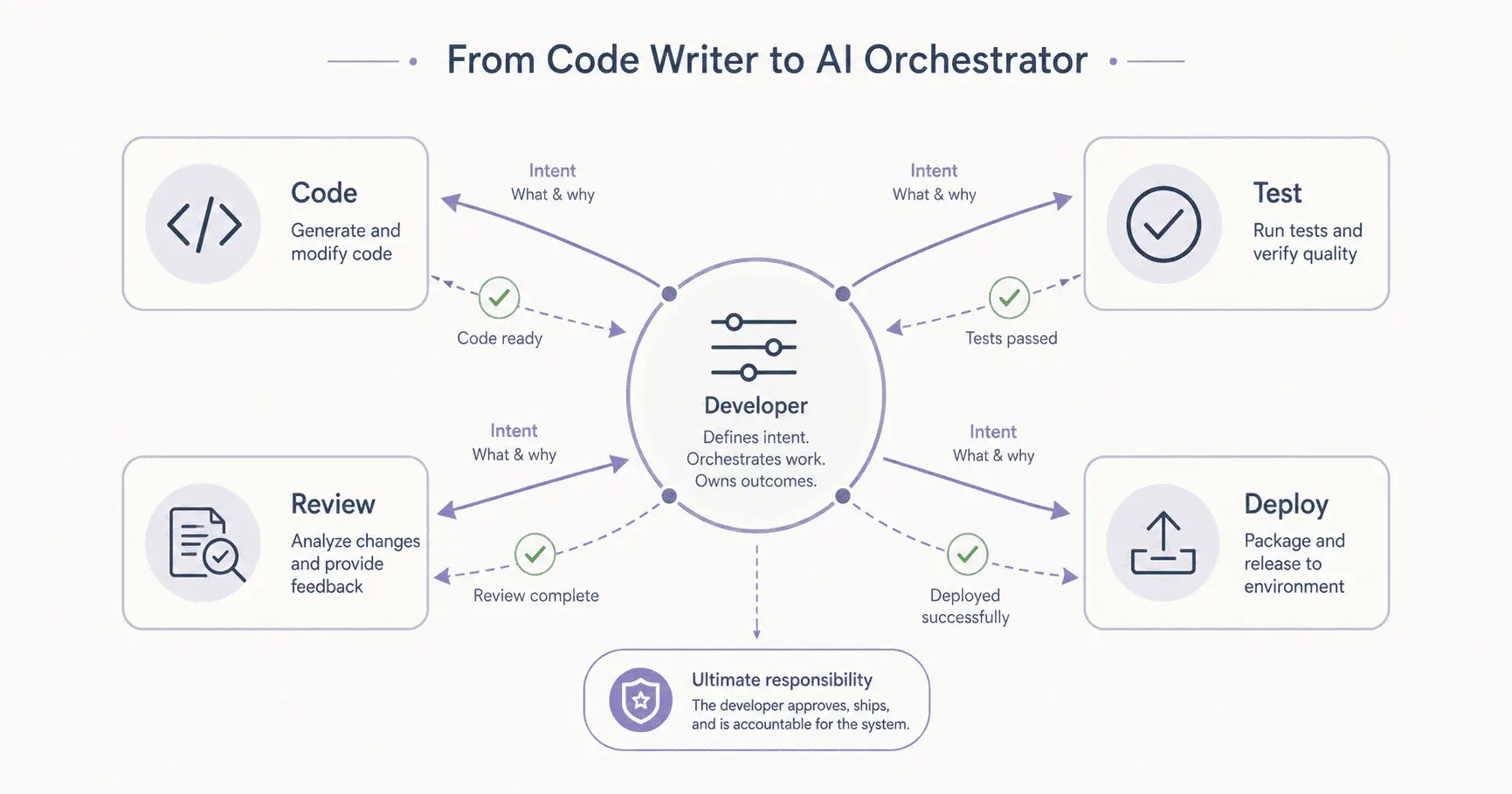
The valuable skills move upward.有价值的技能正在向更高层面转移。
- Can you define the problem clearly?你能清晰地定义问题吗?
- Can you design an architecture that won’t collapse six months later?你能设计一个六个月后不会崩溃的架构吗?
- Can you give an agent enough context to make good decisions?你能给智能体提供足够的上下文来做出正确的决定吗?
- Can you recognize when generated code is subtly wrong?你能识别生成的代码何时微妙地出错了吗?
- Can you decide which tasks are safe to automate and which require human judgment?你能决定哪些任务可以安全自动化,哪些需要人类判断吗?
This is why “prompt engineering” is too narrow a description of the skill developers need. The emerging skill is closer to AI orchestration.这就是为什么“提示词工程”(Prompt Engineering)对于开发者所需的技能描述过于狭隘。新兴的技能更接近于“AI 编排”。
A developer might break a feature into tasks, delegate implementation to an agent, use another system to generate tests, review the changes personally and then rely on operational automation to get the application into production.开发者可能会将功能分解为任务,将实现委派给智能体,使用另一个系统生成测试,亲自审查变更,然后依靠运维自动化将应用程序部署到生产环境。
The same pattern is beginning to extend beyond coding through DevOps AI agents, which apply agentic reasoning to deployment and cloud operations.同样的模式正通过 DevOps AI 智能体扩展到编码之外,它们将智能体推理应用于部署和云运维。
The developer doesn’t disappear from this system. The developer becomes the person responsible for making sure the system as a whole produces the right result.开发者并没有从这个系统中消失。开发者成为了确保整个系统产生正确结果的负责人。
What Should Developers Actually Do in 2026?开发者在 2026 年到底应该做什么?
The worst response to all of this would be trying every AI tool that launches. Developers don’t need 20 subscriptions and a new workflow every week.对这一切最糟糕的反应是尝试每一个新推出的 AI 工具。开发者不需要每周都有 20 个订阅和一套新的工作流。
They need a few durable habits. Start by learning one AI coding environment properly. Understand how it handles repository context, instructions, tests and larger changes rather than using it only as autocomplete.他们需要一些持久的习惯。首先,深入学习一个 AI 编码环境。了解它如何处理代码库上下文、指令、测试和大型变更,而不是仅仅将其用作自动补全。
Then experiment with agents on bounded tasks. Most importantly, keep strengthening the skills AI doesn’t remove.然后,在有界任务上尝试智能体。最重要的是,不断加强 AI 无法替代的技能。
- Learn system design.学习系统设计。
- Understand databases.理解数据库。
- Learn how applications behave in production.了解应用程序在生产环境中的行为。
- Know the basics of security.掌握安全基础知识。
- Get good at debugging.擅长调试。
- Understand why an implementation works rather than accepting it because the test turned green.理解实现方案为什么有效,而不是仅仅因为测试通过了就接受它。
And treat every AI-generated change as something that needs verification. The developers who get the most from AI will not be the ones who trust it the most. They will be the ones who know when to trust it, when to check it and when to take control themselves.并将每一个 AI 生成的变更视为需要验证的内容。从 AI 中获益最多的开发者将不是最信任它的人,而是那些知道何时信任它、何时检查它以及何时亲自接管的人。
AI Is Becoming Part of the Developer StackAI 正在成为开发者技术栈的一部分
The biggest AI trend of 2026 isn’t one model, one editor or one coding agent. It’s that AI is spreading across the entire software development lifecycle.2026 年最大的 AI 趋势不是某一个模型、编辑器或编码智能体,而是 AI 正在蔓延到整个软件开发生命周期。
It started with autocomplete. Then came conversational coding and code generation. Now AI can understand repositories, modify multiple files, run tools, generate tests and increasingly participate in deployment and operations.它始于自动补全,随后是对话式编码和代码生成。现在,AI 可以理解代码库、修改多个文件、运行工具、生成测试,并越来越多地参与到部署和运维中。
The adoption numbers show how quickly the transition is happening. But DORA’s idea of AI as an amplifier may ultimately be the most useful way to understand what happens next.采用率数据展示了这种转变发生的速度。但 DORA 将 AI 视为放大器的观点,最终可能是理解接下来会发生什么的最有用的方式。
- AI can amplify a good developer.AI 可以放大优秀的开发者。
- It can amplify a productive team.它可以放大高效的团队。
- It can amplify good architecture and strong engineering processes.它可以放大良好的架构和强大的工程流程。
But it can also amplify technical debt, weak testing and bad decisions. That is why software engineering isn’t becoming less important in the AI era.但它也可以放大技术债务、薄弱的测试和错误的决定。这就是为什么在 AI 时代,软件工程并没有变得不那么重要。
The act of manually writing every line of software may become less important. Understanding what should be built, how it should work, how to verify it and how to run it reliably becomes more important than ever.手动编写每一行软件的行为可能会变得不那么重要。理解应该构建什么、它应该如何工作、如何验证它以及如何可靠地运行它,变得比以往任何时候都更加重要。
And that may be the real developer skill of 2026…而这可能就是 2026 年真正的开发者技能……