Pair Opus as an advisor with Sonnet or Haiku as an executor, and get near Opus-level intelligence in your agents at a fraction of the cost.
Pair Opus as an advisor with Sonnet or Haiku as an executor, and get near Opus-level intelligence in your agents at a fraction of the cost.
Developers who want to better balance intelligence and cost have converged on what we call the advisor strategy: pair Opus as an advisor with Sonnet or Haiku as an executor. This brings near Opus-level intelligence to your agents while keeping costs near Sonnet levels.希望更好地平衡智能与成本的开发者们,共同聚焦于我们称之为“顾问策略”的方案:将Opus作为顾问,与作为执行者的Sonnet或Haiku配对。这能为您的智能体带来接近Opus级别的智能,同时将成本维持在Sonnet级别附近。
Today we're introducing the advisor tool on the Claude Platform to make the advisor strategy a one-line change in your API call.今天,我们在Claude平台上推出了顾问工具,使顾问策略在您的API调用中只需一行代码即可实现。
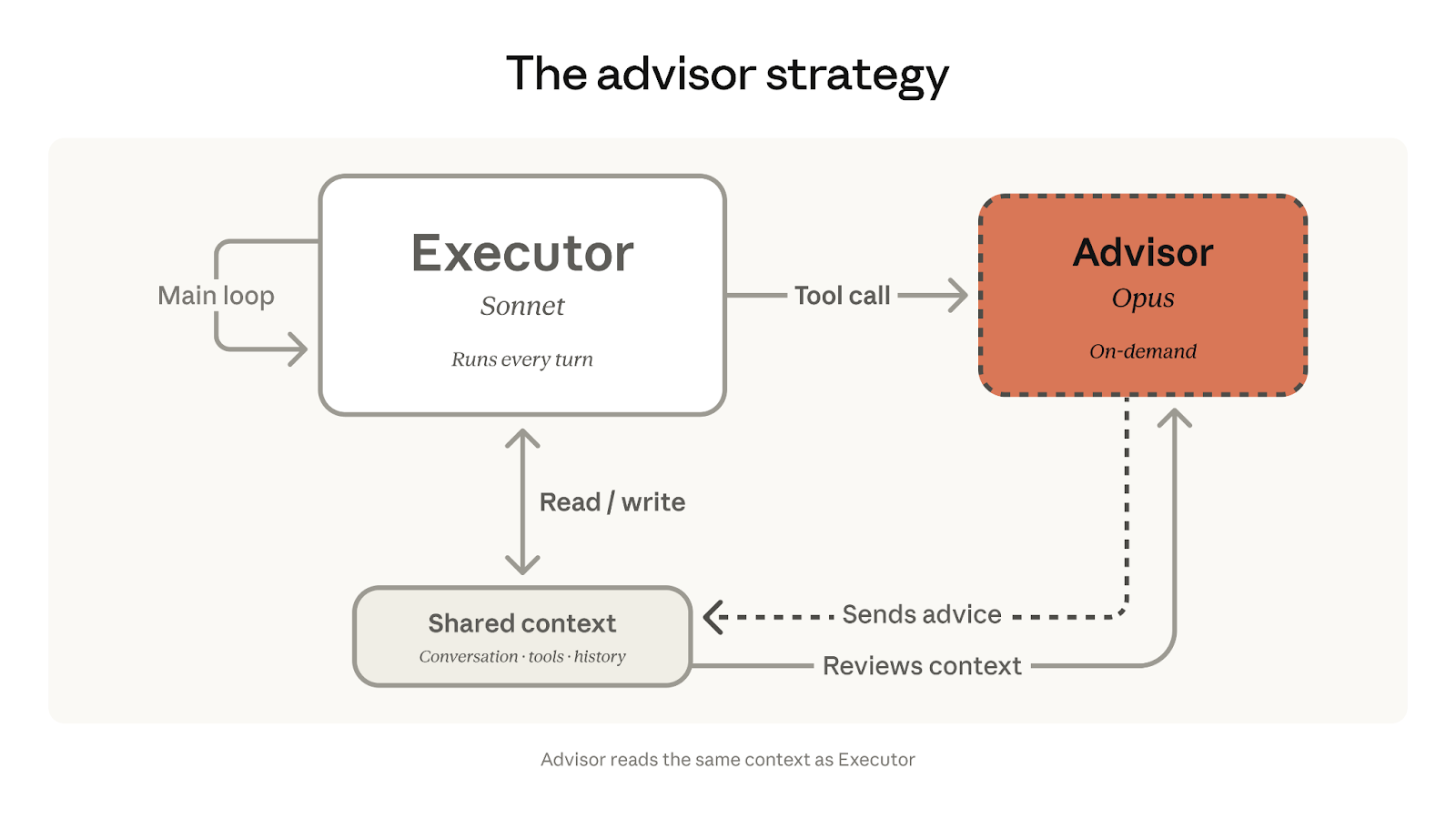
With the advisor strategy, Sonnet or Haiku runs the task end-to-end as the executor, calling tools, reading results, and iterating toward a solution. When the executor hits a decision it can't reasonably solve, it consults Opus for guidance as the advisor. Opus accesses the shared context and returns a plan, a correction, or a stop signal, and the executor resumes. The advisor never calls tools or produces user-facing output, and only provides guidance to the executor.采用顾问策略时,Sonnet或Haiku作为执行者端到端地运行任务,调用工具、读取结果并迭代寻找解决方案。当执行者遇到无法合理解决的决策时,它会向作为顾问的Opus寻求指导。Opus访问共享上下文并返回计划、修正或停止信号,随后执行者继续执行。顾问从不调用工具或产生面向用户的输出,仅向执行者提供指导。
This inverts a common sub-agent pattern, where a larger orchestrator model decomposes work and delegates to smaller worker models. In the advisor strategy, a smaller, more cost-effective model drives and escalates without decomposition, a worker pool, or orchestration logic. Frontier-level reasoning applies only when the executor needs it, and the rest of the run stays at executor-level cost.这颠覆了常见的子智能体模式——即由较大的编排模型分解工作并委派给较小的工作模型。在顾问策略中,一个更小、更具成本效益的模型驱动并升级问题,无需分解、工作池或编排逻辑。前沿级别的推理仅在执行者需要时应用,其余运行过程保持执行者级别的成本。
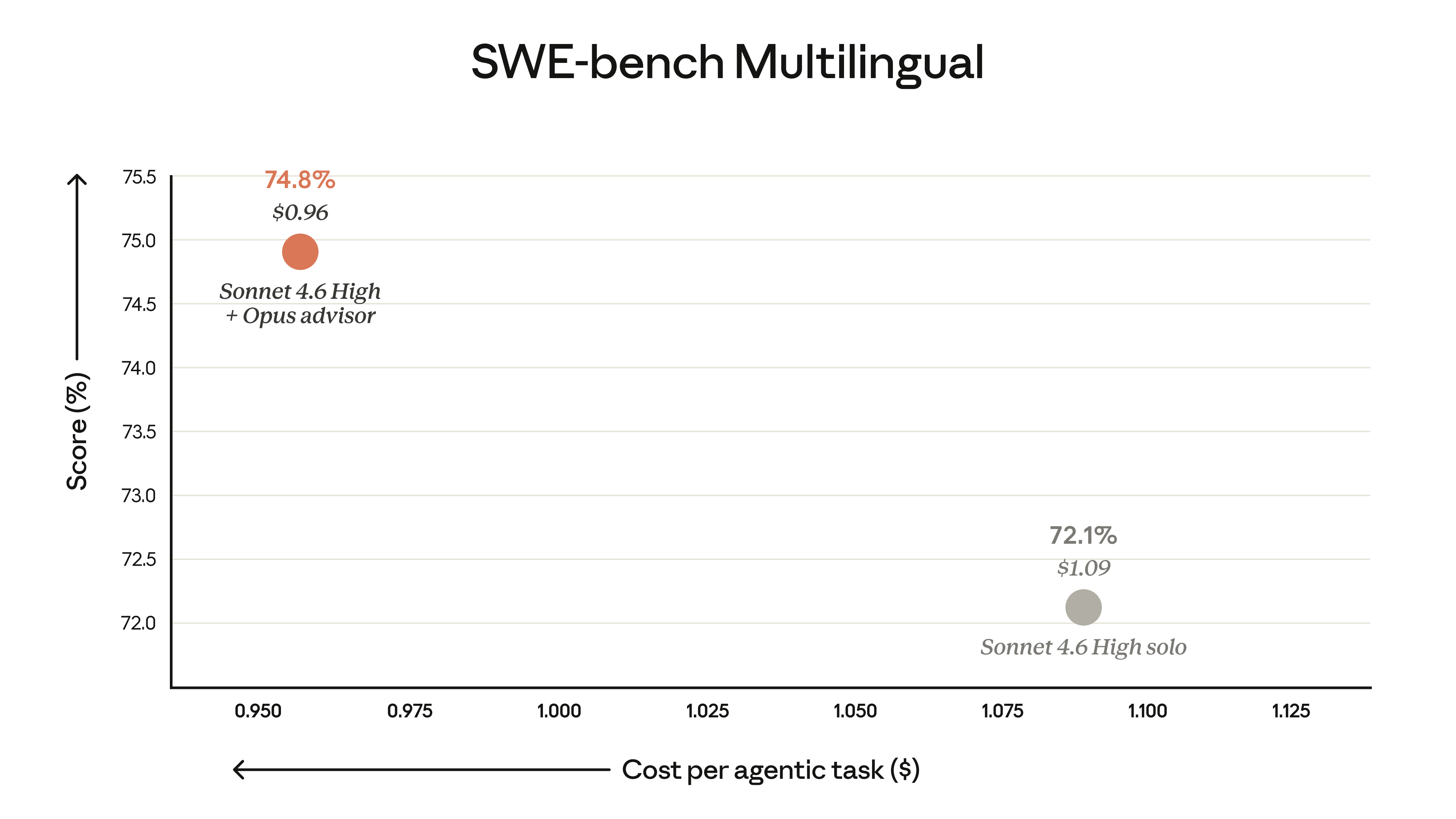
In our evaluations, Sonnet with Opus as an advisor showed a 2.7 percentage point increase on SWE-bench Multilingual1 over Sonnet alone, while reducing cost per agentic task by 11.9%.在我们的评估中,Sonnet搭配Opus作为顾问,在SWE-bench多语言基准测试中比单独使用Sonnet提升了2.7个百分点,同时每个智能体任务的成本降低了11.9%。
We’re bringing the advisor strategy to our API with the advisor tool, a server-side tool which Sonnet and Haiku know to invoke when they need guidance or help with a specific task.我们通过顾问工具将顾问策略引入API,这是一个服务器端工具,Sonnet和Haiku在需要针对特定任务寻求指导或帮助时会调用它。
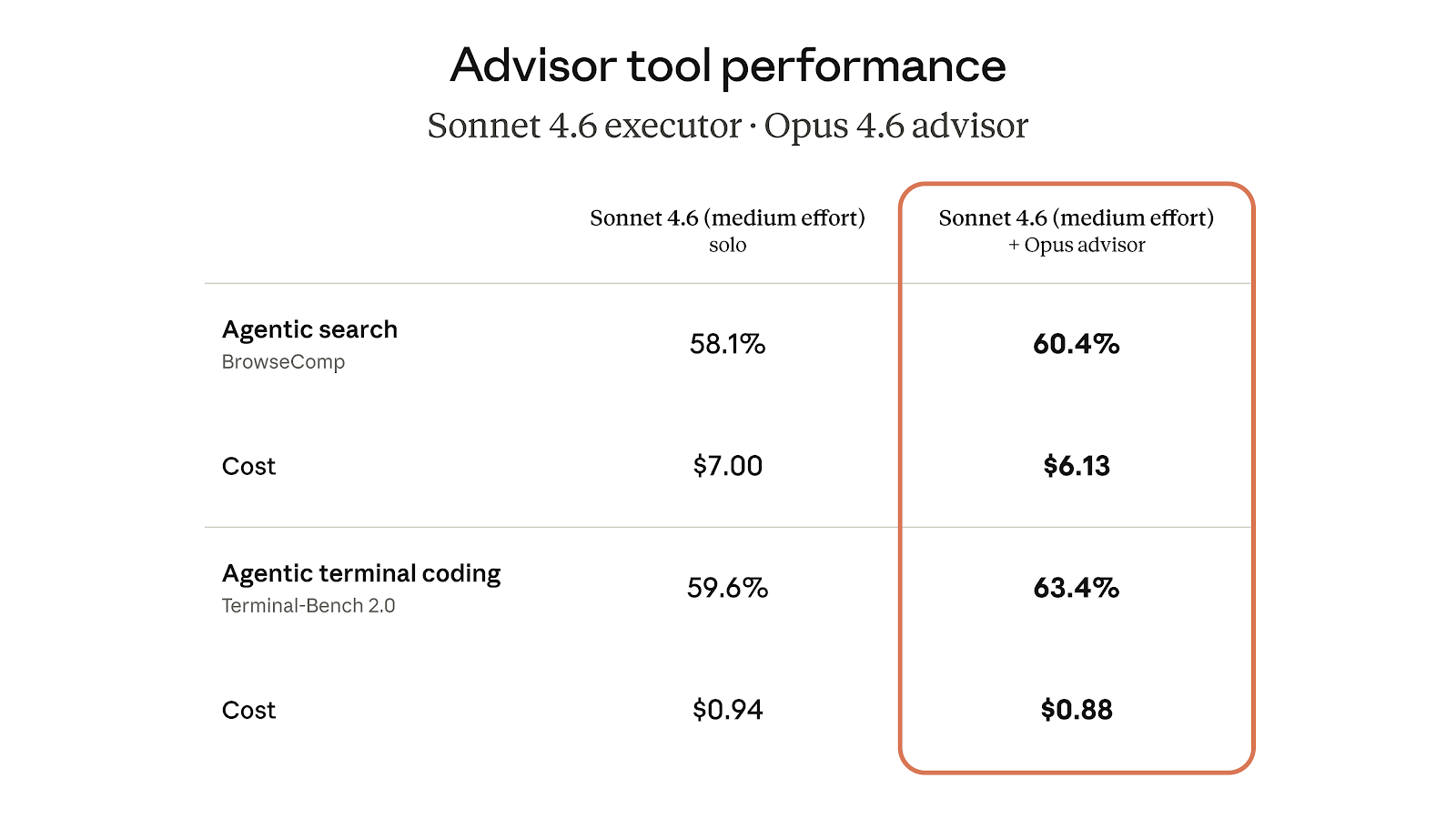
In our evaluations, Sonnet with an Opus advisor improved scores across BrowseComp2 and Terminal-Bench 2.03 benchmarks while costing less per task than Sonnet alone.在我们的评估中,Sonnet搭配Opus顾问在BrowseComp和Terminal-Bench 2.0基准测试中均提升了分数,同时每个任务的成本低于单独使用Sonnet。
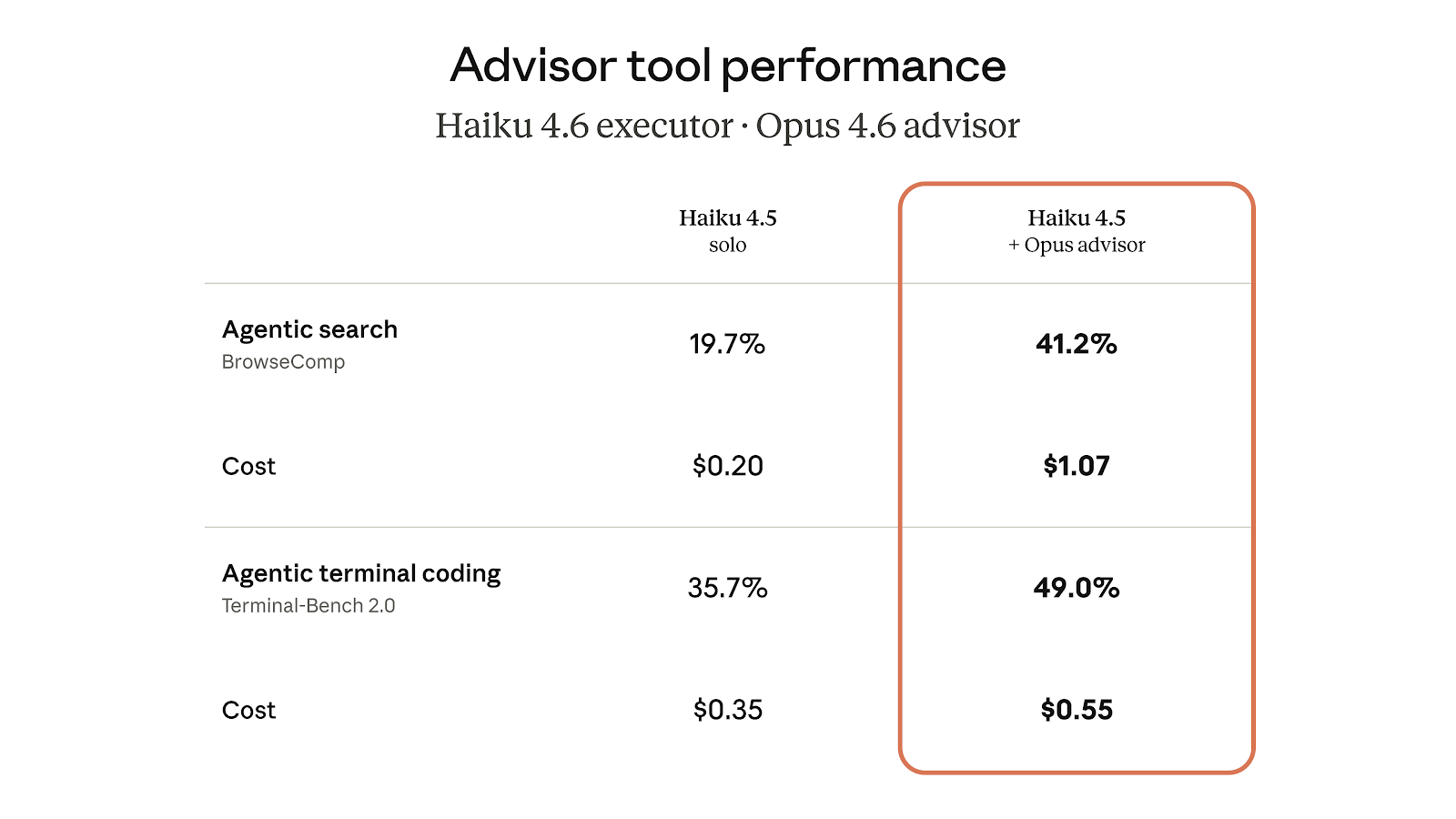
The advisor strategy also works with Haiku as the executor. On BrowseComp, Haiku with an Opus advisor scored 41.2%, more than double its solo score of 19.7%. Haiku with an Opus advisor trails Sonnet solo by 29% in score but costs 85% less per task. The advisor adds cost relative to Haiku alone, but the combined price is still a fraction of what Sonnet costs, making it a strong option for high-volume tasks that require a balance of intelligence and cost.顾问策略同样适用于Haiku作为执行者。在BrowseComp上,Haiku搭配Opus顾问得分为41.2%,是其单独得分19.7%的两倍多。Haiku搭配Opus顾问在分数上比单独使用Sonnet低29%,但每个任务成本低85%。与单独使用Haiku相比,顾问增加了成本,但组合价格仍仅为Sonnet成本的一小部分,使其成为需要平衡智能与成本的高吞吐量任务的强力选择。
Declare advisor_20260301 in your Messages API request, and the model handoff happens inside a single /v1/messages request—no extra round-trips or context management. The executor model decides when to invoke it. When it does, we route the curated context to the advisor model, return the plan, and the executor continues all within the same request.
在您的Messages API请求中声明advisor_20260301,模型切换将在单个/v1/messages请求内完成——无需额外的往返或上下文管理。执行者模型决定何时调用它。当调用时,我们将精选的上下文路由到顾问模型,返回计划,然后执行者在同一请求内继续执行。
response = client.messages.create(
    model="claude-sonnet-4-6",  # executor
    tools=[
        {
            "type": "advisor_20260301",
            "name": "advisor",
            "model": "claude-opus-4-6",
            "max_uses": 3,
        },
        # ... your other tools
    ],
    messages=[...]
)

# Advisor tokens reported separately
# in the usage block.Pricing. Advisor tokens are billed at the advisor model's rates; executor tokens are billed at the executor model's rates. Since the advisor only generates a short plan (typically 400-700 text tokens) while the executor handles the full output at its lower rate, the overall cost stays well below running the advisor model end-to-end.
Built-in cost controls. Set max_uses to cap advisor calls per request. Advisor tokens are reported separately in the usage block so you can track spend per tier.定价。顾问令牌按顾问模型的费率计费;执行者令牌按执行者模型的费率计费。由于顾问仅生成简短计划(通常400-700文本令牌),而执行者以较低费率处理完整输出,因此总体成本远低于端到端运行顾问模型。内置成本控制。设置max_uses以限制每次请求的顾问调用次数。顾问令牌在usage块中单独报告,以便您按层级跟踪支出。
Works alongside your existing tools. The advisor tool is just another entry in your Messages API request. Your agent can search the web, execute code, and consult Opus in the same loop.与您现有工具协同工作。顾问工具只是Messages API请求中的另一个条目。您的智能体可以在同一循环中搜索网络、执行代码并咨询Opus。

The advisor tool is available now in beta natively on the Claude Platform. To get started:顾问工具现已在Claude平台上以测试版形式原生提供。要开始使用:
We recommend running your existing eval suite against Sonnet solo, Sonnet executor with Opus advisor, and Opus solo. Explore the docs to learn more.我们建议针对单独使用Sonnet、Sonnet执行者搭配Opus顾问以及单独使用Opus这三种情况运行您现有的评估套件。查阅文档了解更多信息。
Get the developer newsletter
Product updates, how-tos, community spotlights, and more. Delivered monthly to your inbox.